Shared Data and Relationships
Connect canonical configuration, service and operational records.
Shared Data and RelationshipsConnect canonical configuration, service and operational records.
Workflows and WorkspacesGive teams focused surfaces and accountable work history.
Identity and AdministrationConfigure roles, record access, fields and organization context.
Intelligence and EvidenceUse scoped assistance, reporting and visible source context.
ServiceContext
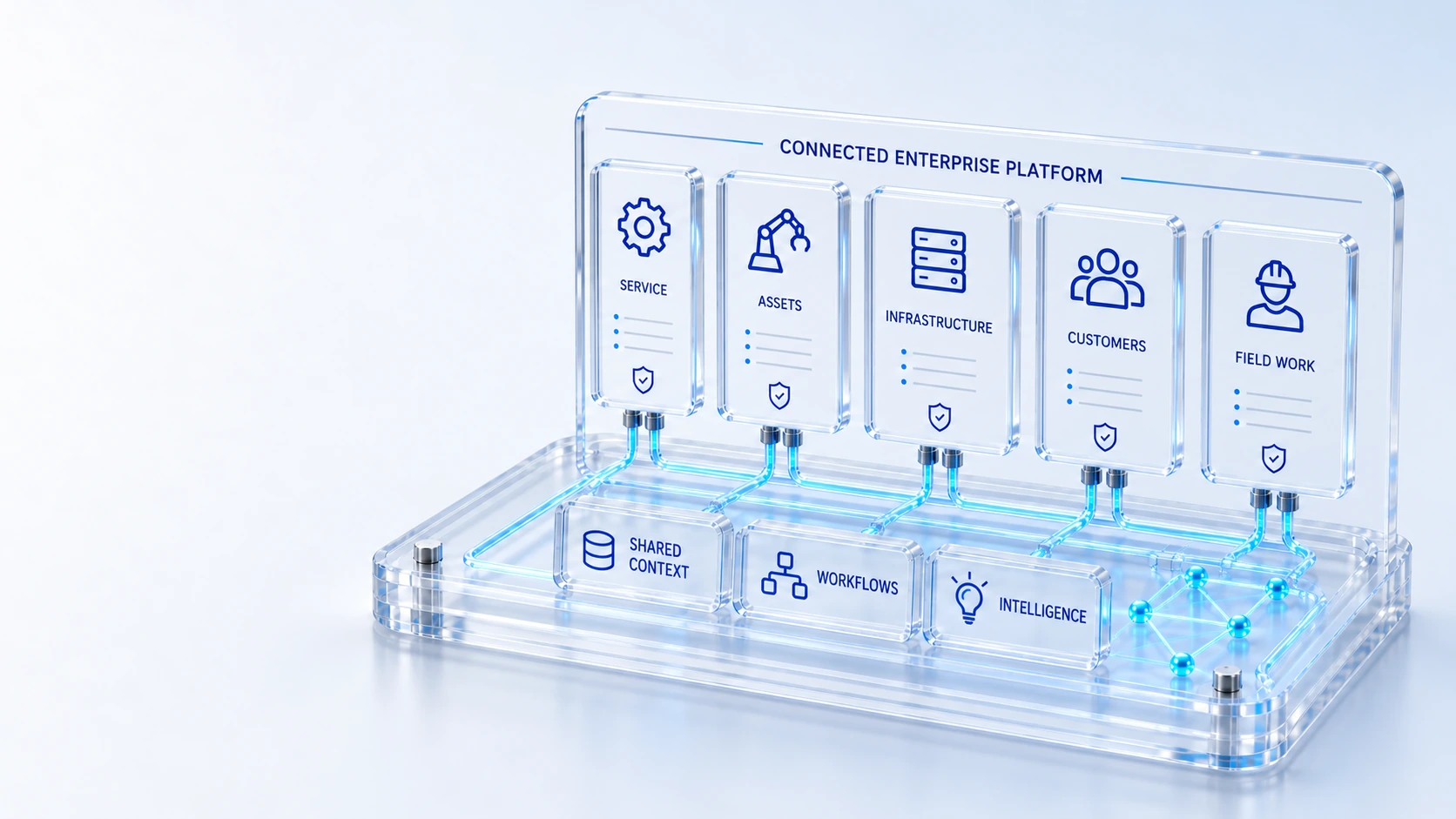
A shared record, service, identity and intelligence foundation connects the work across your enterprise.
Connect canonical configuration, service and operational records.
Give teams focused surfaces and accountable work history.
Configure roles, record access, fields and organization context.
Use scoped assistance, reporting and visible source context.
Service → Context → Action
Explore the details below, then bring your workflow, source data and questions to a guided conversation.
Platform architecture
Unite the shared record engine, CMDB, workflow, identity, AI assistance and collaboration behind every workspace.
Explore 02 / CONNECTED PLATFORMConnect configuration, service portfolios, service offerings, dependencies and IT/OT classification to operational work.
Explore 03 / CONNECTED PLATFORMUse workspace and record assistance with scoped retrieval, visible source evidence and confidence indicators.
Explore 04 / CONNECTED PLATFORMConnect incident, problem, change, request and knowledge records to service levels and the portal.
Explore 05 / CONNECTED PLATFORMConnect event operations, CI health, recorded dependencies and technical recovery.
Explore 06 / CONNECTED PLATFORMUse shared discovery identities and CMDB relationships across cloud planning, connection validation and FinOps governance.
Explore 07 / CONNECTED PLATFORMManage table and field definitions, module configuration and governance in the shared administration workspace.
Explore 08 / CONNECTED PLATFORMConnect tenant identity, federation, provisioning and configurable record and field access to operational work.
Explore 09 / CONNECTED PLATFORMBring activity, work notes, customer communication and governed attachments into record context.
Explore 10 / CONNECTED PLATFORMConfigure discovery and external knowledge sources, federation and domain event delivery with operational evidence.
Explore 11 / CONNECTED PLATFORMMaintain the users, groups, roles, memberships, locations, departments, companies and cost centers behind accountable work.
Explore 12 / CONNECTED PLATFORMBring role-aware overviews, reporting scopes, usage, costs and performance into visible governance.
ExploreThe shared foundation

Who this is for
Product workspaces need a foundation that can relate records, apply configured access and preserve the context of work. A platform evaluation should examine those relationships and boundaries rather than inferring an architecture solely from a collection of dashboard tiles.
Illustrative walkthrough
A service issue can touch a configuration item, a hardware asset, a location, an accountable person and a related work record. Use a synthetic scenario to inspect how that context is represented and which role can act on it.
Review the relevant record types, references and directional relationships. Identify the source that establishes each identity and relationship. A shared foundation should make context inspectable; it does not mean that every source is complete or that every relationship is automatically discovered.
Use the agreed roles to inspect the available records and actions. Review configured identity, record and field access, approval requirements and attachment context. Keep authentication, authorization and operational responsibility distinct while validating the workflow.
Inspect activity, reporting context, source coverage and the boundary of connected providers. Confirm what is configured, what is verified and what requires implementation work. Record the findings in an architecture and acceptance discussion before approving production scope.
For this illustrative evaluation, retain the starting records, the decisions made by each accountable role, and the evidence that supports completion. Agree the scope and acceptance criteria before interpreting a demonstration as production readiness.
Explore the platform
Open a workspace for a closer look.
Prepare the evaluation
These are evaluation criteria, not promised outcomes. Agree the baseline, scope, source coverage and acceptance method with the responsible owners before drawing conclusions.
Questions for this topic
No. Shared records provide context, while configured permissions and workflow responsibilities govern access and action. An evaluation should test both the relationships that make work connected and the restrictions appropriate to each role.
Start with one service and its people, assets, configuration items and work records. Identify authoritative sources and the required relationships. The Architecture, Identity, Configuration Studio and Integrations pages help turn that example into a concrete review agenda.
No. Supported interfaces, provider scopes, data coverage and external action boundaries must be confirmed. A reference to a provider or domain event does not establish universal compatibility or automatic access to a third-party system.
Your next operating chapter
Bring one workflow, one service challenge or one part of your estate. We’ll show you where Qintorava fits.