Canonical CIs
Maintain a shared configuration identity across operations, hardware and software records.
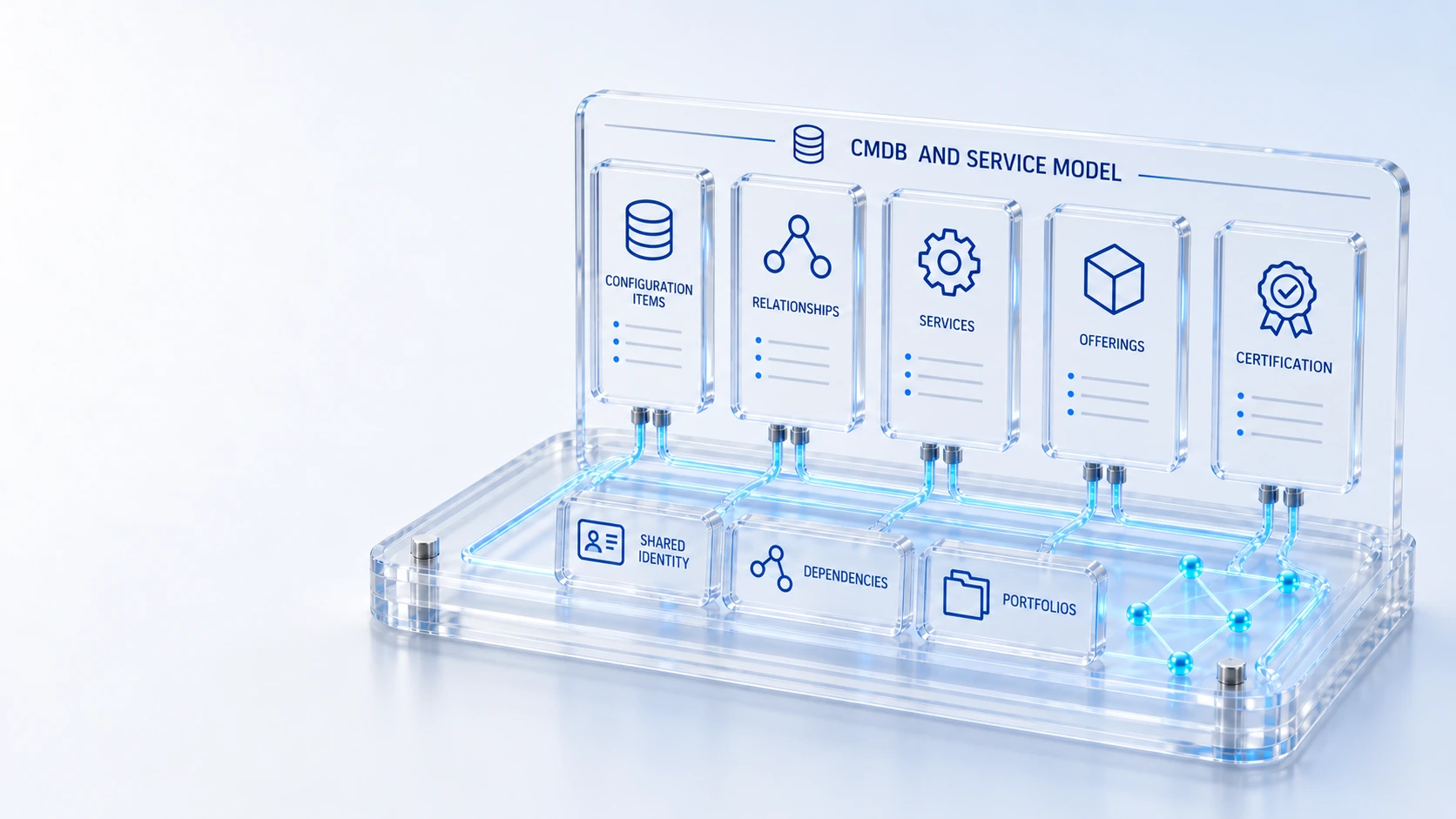
Canonical CIsMaintain a shared configuration identity across operations, hardware and software records.
CSDM ServicesRelate business, technology and application-service CIs to a governed service model.
Offering HierarchyBind offerings to their parent services and portfolio taxonomy.
Dependency TraversalFollow saved service and infrastructure relationships, with visible health coverage.
IdentityRelationships
Connect configuration, service portfolios, service offerings, dependencies and IT/OT classification to operational work.
Maintain a shared configuration identity across operations, hardware and software records.
Relate business, technology and application-service CIs to a governed service model.
Bind offerings to their parent services and portfolio taxonomy.
Follow saved service and infrastructure relationships, with visible health coverage.
Identity → Relationships → Service
Explore the details below, then bring your workflow, source data and questions to a guided conversation.
Built into the platform
Maintain a shared configuration identity across operations, hardware and software records.
Relate business, technology and application-service CIs to a governed service model.
Bind offerings to their parent services and portfolio taxonomy.
Follow saved service and infrastructure relationships, with visible health coverage.
Review normalization and certification of the data used in operational work.
Distinguish IT, OT, shared infrastructure and unclassified equipment by functional role.
Actual product view
See the running demo environment. Features and records are subject to your role, configuration and integrations.
Connected by design
Service records, configuration items, people, locations and evidence share the same operational foundation. Move from investigation to the related asset, service or customer workflow with clear ownership.
Explore the platform architectureImplementation context
Features depend on enabled modules, configured roles, source data and supported integrations. Agree your implementation scope and acceptance criteria during discovery.
Who this is for
Cross-module context depends on more than drawing a relationship diagram. The platform needs canonical identities, typed service references and governed taxonomy so hardware, software and operational workflows can describe the same enterprise consistently. An evaluation of CMDB & Service Model should make those boundaries inspectable before the team relies on the operating view.
Illustrative walkthrough
A fictional architecture team defines a business service, technology service and related offering. It wants to inspect the saved dependency direction, certify the supporting data and understand how the shared model serves service, asset and facility work.
Review the configuration classes and the shared identity used across hardware, software and operational records before introducing new relationships into the enterprise model. Maintain a shared configuration identity across operations, hardware and software records.
Relate the service types, governed portfolio taxonomy and validated offering references, then follow saved dependencies that make the intended operating context explicit. Bind offerings to their parent services and portfolio taxonomy.
Inspect normalization, certification and IT or OT classification, identifying missing relationship or health coverage rather than interpreting the diagram as a complete discovered estate. Review normalization and certification of the data used in operational work.
Ask the architecture team to trace an offering to its parent service and supporting CIs, showing both validated references and a known data-quality gap that requires stewardship. Use demonstration records and preserve the applicable reporting scope.
Explore the platform
Open a workspace for a closer look.
Prepare the evaluation
These are evaluation criteria, not promised outcomes. Agree the baseline, scope, source coverage and acceptance method with the responsible owners before drawing conclusions.
Questions for this topic
No. A connected model still depends on recorded relationships, canonical identities, normalization and certification work that responsible data owners must review and maintain.
Yes. The available model binds offerings to their parent services and portfolio taxonomy through validated references, giving operational work a consistent service hierarchy.
Identify the missing or unverified relationship explicitly and establish its source and owner; a visible map should not be treated as proof of complete topology or monitoring coverage.
Your next operating chapter
Bring one workflow, one service challenge or one part of your estate. We’ll show you where Qintorava fits.