Incident and Major Incident Response
Manage priority, assignment, investigation and restoration in connected records.
Incident and Major Incident ResponseManage priority, assignment, investigation and restoration in connected records.
Problem ManagementTrack recurring issues, root cause and known-error work.
Change GovernanceCoordinate CAB schedules, blackout windows, standard templates and the organization change calendar.
Request FulfillmentConnect catalog intake, approval and fulfillment to the employee portal.
IntakeOwnership
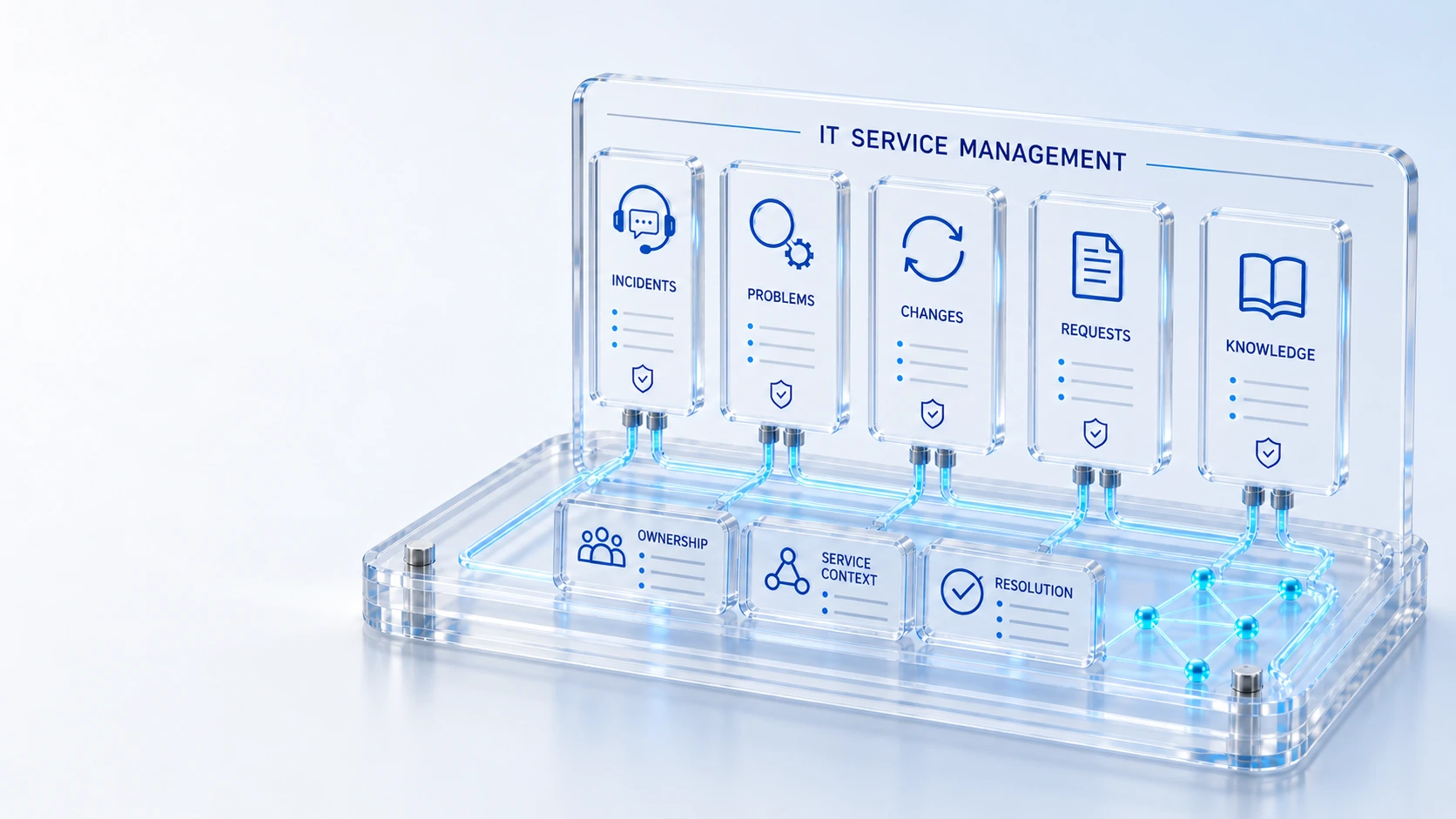
Unite incidents, major incidents, problems, changes and requests with service context, accountable ownership and AI assistance.
Manage priority, assignment, investigation and restoration in connected records.
Track recurring issues, root cause and known-error work.
Coordinate CAB schedules, blackout windows, standard templates and the organization change calendar.
Connect catalog intake, approval and fulfillment to the employee portal.
Intake → Ownership → Resolution
Explore the details below, then bring your workflow, source data and questions to a guided conversation.
Built into the platform
Manage priority, assignment, investigation and restoration in connected records.
Track recurring issues, root cause and known-error work.
Coordinate CAB schedules, blackout windows, standard templates and the organization change calendar.
Connect catalog intake, approval and fulfillment to the employee portal.
Find governed knowledge while working a service record.
Connect response and resolution targets to configured calendars and service levels.
Actual product view
See the running demo environment. Features and records are subject to your role, configuration and integrations.
Connected by design
Service records, configuration items, people, locations and evidence share the same operational foundation. Move from investigation to the related asset, service or customer workflow with clear ownership.
Explore the platform architectureImplementation context
Views and actions follow configured roles, permissions, enabled modules and connected source data. Screens show a demonstration environment.
Who this is for
A payment incident crosses the service desk, application team and change calendar. Separate queues obscure who owns restoration and whether recurring symptoms already have a problem record. An evaluation of IT Service Management should make those boundaries inspectable before the team relies on the operating view.
Illustrative walkthrough
A fictional retailer receives reports of failed checkout after a planned release. Its service team needs to prioritize the incident, inspect related work and coordinate an approved recovery without losing request or knowledge context. This is an illustrative evaluation scenario, not a claim about a customer deployment.
Record the reported impact, affected service, priority and accountable assignment before asking other teams to investigate. Manage priority, assignment, investigation and restoration in connected records.
Review the proposed recovery against the change calendar, relevant blackout window and the approval route configured for that change. Coordinate CAB schedules, blackout windows, standard templates and the organization change calendar.
Capture the restoration evidence, associate recurring symptoms with problem work and identify the knowledge article that should help the next responder. Find governed knowledge while working a service record.
An evaluator should follow one incident through assignment, related change, restoration notes and any problem follow-up rather than relying only on a dashboard total. Use demonstration records and preserve the applicable reporting scope.
Explore the platform
Open a workspace for a closer look.
Prepare the evaluation
These are evaluation criteria, not promised outcomes. Agree the baseline, scope, source coverage and acceptance method with the responsible owners before drawing conclusions.
Questions for this topic
The platform connects catalog request intake and incident work while preserving their separate record types, ownership and fulfillment needs.
Response and resolution commitments depend on the supported workflow, configured calendars and service-level rules selected for the organization.
AI can assist the responder, but guidance does not replace the configured change authorization or the responsible human decision.
Your next operating chapter
Bring one workflow, one service challenge or one part of your estate. We’ll show you where Qintorava fits.