CI Inventory
Maintain typed classes and canonical configuration records.
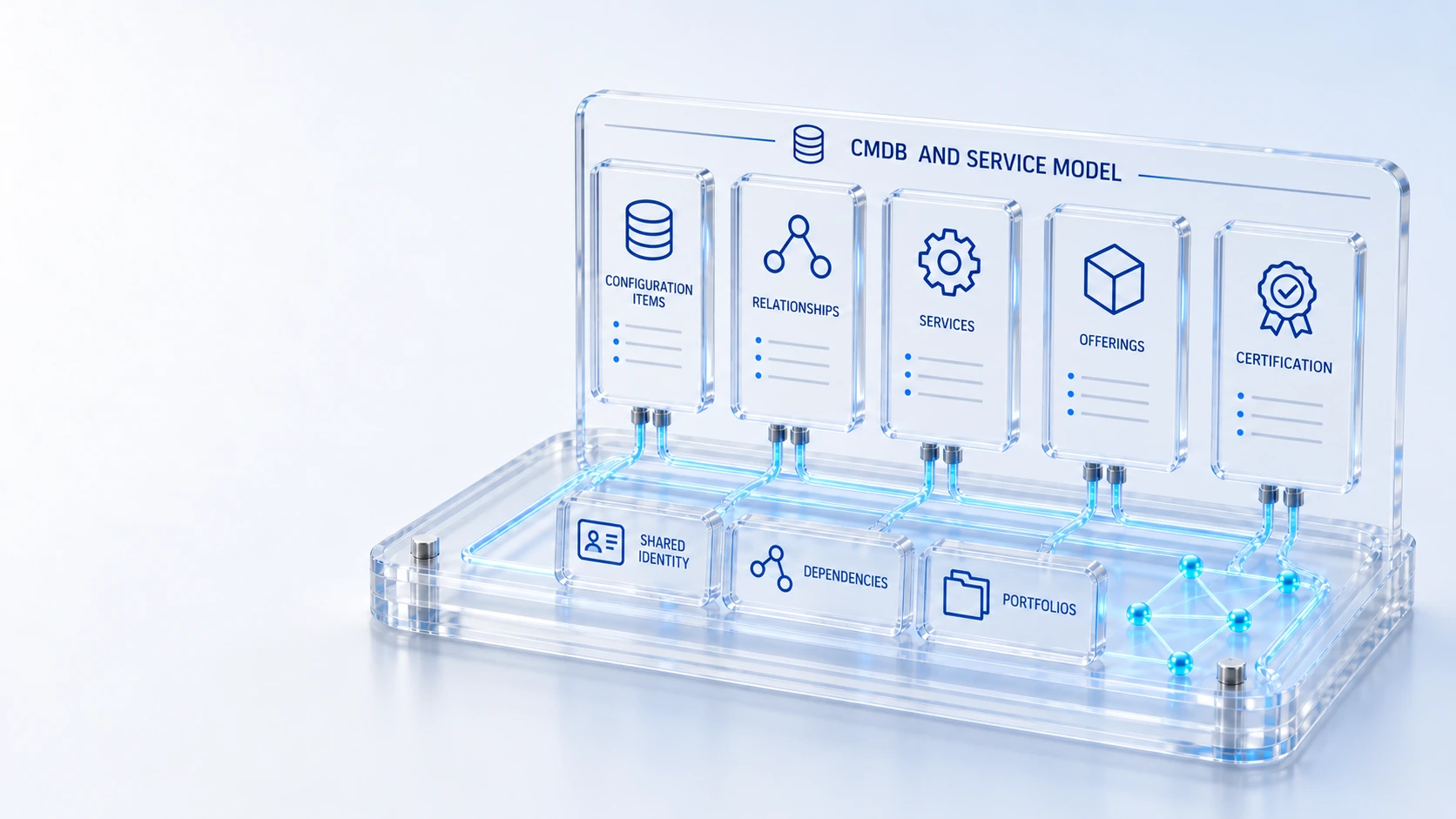
CI InventoryMaintain typed classes and canonical configuration records.
Dependency MapsTraverse recorded relationships and location ancestry.
Service PortfoliosOrganize services with governed portfolio taxonomy.
CSDM Services and OfferingsBind service and offering CIs through validated references.
IdentityRelationships
Connect typed CIs, dependencies, service portfolios, services and offerings to hardware, software and customer operations.
Maintain typed classes and canonical configuration records.
Traverse recorded relationships and location ancestry.
Organize services with governed portfolio taxonomy.
Bind service and offering CIs through validated references.
Identity → Relationships → Service
Explore the details below, then bring your workflow, source data and questions to a guided conversation.
Built into the platform
Maintain typed classes and canonical configuration records.
Traverse recorded relationships and location ancestry.
Organize services with governed portfolio taxonomy.
Bind service and offering CIs through validated references.
Review normalization and certification workflows.
Distinguish IT, OT, shared and unclassified equipment.
Actual product view
See the running demo environment. Features and records are subject to your role, configuration and integrations.
Connected by design
Service records, configuration items, people, locations and evidence share the same operational foundation. Move from investigation to the related asset, service or customer workflow with clear ownership.
Explore the platform architectureImplementation context
Views and actions follow configured roles, permissions, enabled modules and connected source data. Screens show a demonstration environment.
Who this is for
A configuration inventory becomes hard to trust when hardware, software and service teams maintain competing identities. Service impact also remains ambiguous when portfolio, offering and dependency references are not governed consistently. An evaluation of CMDB & CSDM should make those boundaries inspectable before the team relies on the operating view.
Illustrative walkthrough
A fictional enterprise models its employee access service and its supporting application and hardware. The data steward wants canonical CIs, a clear service offering and recorded dependencies that operational teams can inspect during an incident.
Identify the correct typed classes and shared configuration records before creating another representation of the same hardware, software or service entity. Maintain typed classes and canonical configuration records.
Bind the offering to its validated service reference and portfolio taxonomy, then inspect saved dependencies and relevant location ancestry. Organize services with governed portfolio taxonomy. Ask the demonstrator to identify the responsible role and the source evidence for this step.
Check normalization and certification workflows, and distinguish IT, OT, shared and unclassified equipment according to the recorded functional role. Review normalization and certification workflows. Ask the demonstrator to identify the responsible role and the source evidence for this step.
Choose one service offering and follow its parent service, canonical configuration identity and recorded infrastructure relationships; ask the steward to identify incomplete or uncertified data explicitly. Use demonstration records and preserve the applicable reporting scope.
Explore the platform
Open a workspace for a closer look.
Prepare the evaluation
These are evaluation criteria, not promised outcomes. Agree the baseline, scope, source coverage and acceptance method with the responsible owners before drawing conclusions.
Questions for this topic
The available model connects portfolios, services and offerings with validated references, allowing configuration records to carry service context rather than appearing only as isolated equipment rows.
No. Traversal reflects relationships that have been recorded and are visible to the current role; missing relationships should be addressed through data stewardship and discovery review.
The shared inventory distinguishes IT, OT, shared infrastructure and unclassified equipment by functional role while retaining typed configuration identities and governed relationships.
Your next operating chapter
Bring one workflow, one service challenge or one part of your estate. We’ll show you where Qintorava fits.