Workspace Overviews
Summarize the permitted reporting scope within the current operating workspace.
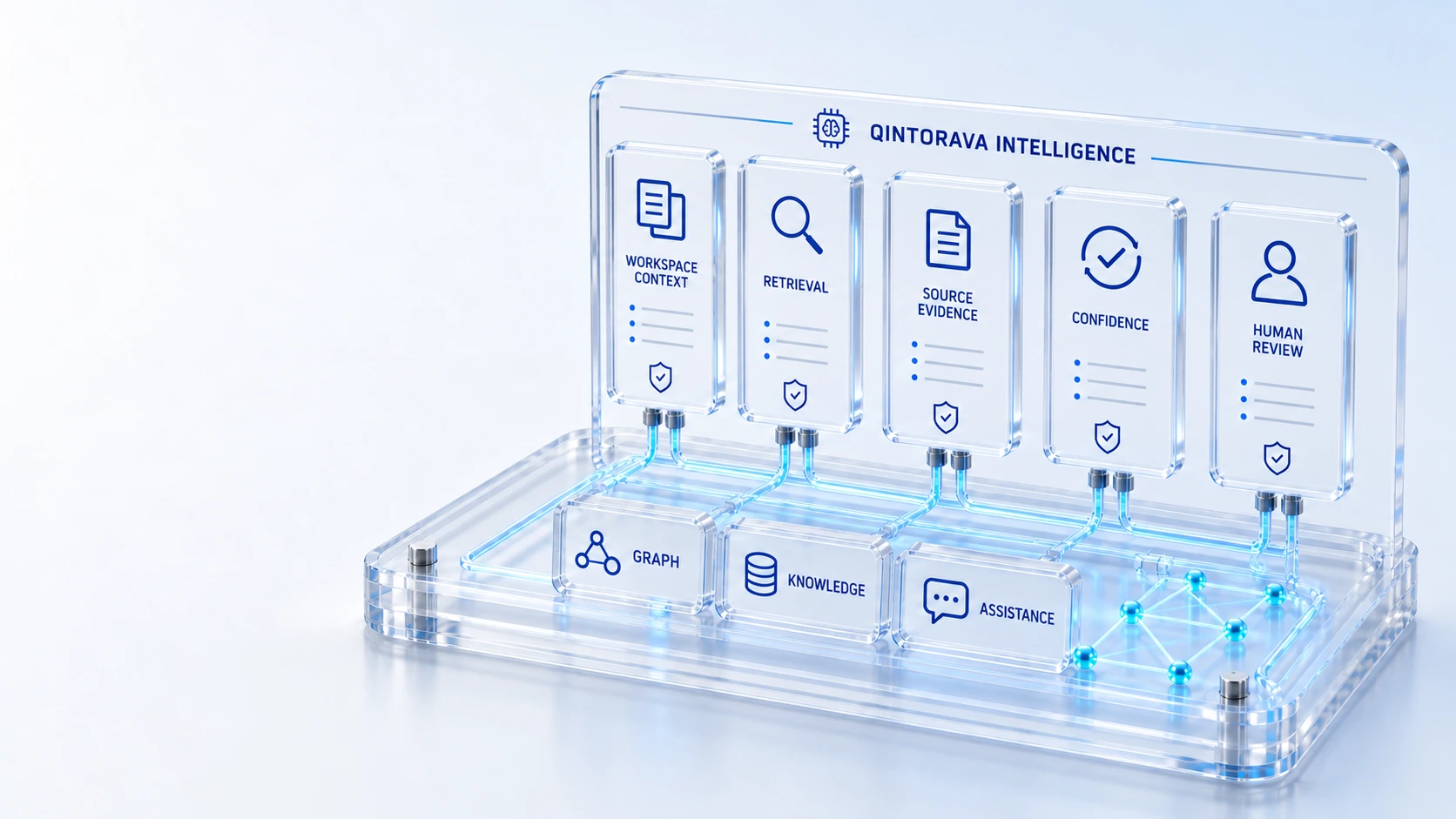
Workspace OverviewsSummarize the permitted reporting scope within the current operating workspace.
Record AssistanceAsk for contextual guidance while inspecting a service or operational record.
Retrieval ContextGround assistance in scoped graph and vector retrieval before model fallback.
Confidence SignalsIdentify ungrounded or low-confidence guidance before relying on it.
RetrieveExplain
Use workspace and record assistance with scoped retrieval, visible source evidence and confidence indicators.
Summarize the permitted reporting scope within the current operating workspace.
Ask for contextual guidance while inspecting a service or operational record.
Ground assistance in scoped graph and vector retrieval before model fallback.
Identify ungrounded or low-confidence guidance before relying on it.
Retrieve → Explain → Review
Explore the details below, then bring your workflow, source data and questions to a guided conversation.
Built into the platform
Summarize the permitted reporting scope within the current operating workspace.
Ask for contextual guidance while inspecting a service or operational record.
Ground assistance in scoped graph and vector retrieval before model fallback.
Identify ungrounded or low-confidence guidance before relying on it.
Keep recommendations separate from approval, customer publication and physical execution.
Administer the AI configuration and review platform usage context.
Actual product view
See the running demo environment. Features and records are subject to your role, configuration and integrations.
Connected by design
Service records, configuration items, people, locations and evidence share the same operational foundation. Move from investigation to the related asset, service or customer workflow with clear ownership.
Explore the platform architectureImplementation context
Features depend on enabled modules, configured roles, source data and supported integrations. Agree your implementation scope and acceptance criteria during discovery.
Who this is for
AI adoption creates governance gaps when a generated overview is mistaken for an approved action. Evaluators need to understand permitted retrieval, confidence, evidence and the human control points surrounding operational decisions. An evaluation of AI & Assistance should make those boundaries inspectable before the team relies on the operating view.
Illustrative walkthrough
A fictional governance team evaluates an AI overview in a restricted workspace and record assistance on a service issue. It checks grounding and insufficient-evidence behavior before agreeing which human roles may use the guidance in their operating process.
Identify the permitted reporting scope and inspect the graph or vector context available to assistance before discussing how the generated overview should be used. Summarize the permitted reporting scope within the current operating workspace.
Ask for the evidence behind the guidance and demonstrate how ungrounded or low-confidence output is surfaced to the user reviewing the response. Ground assistance in scoped graph and vector retrieval before model fallback.
Use the AI control plane and operational process to distinguish assistance from change approval, customer publication or physical execution responsibilities. Keep recommendations separate from approval, customer publication and physical execution.
Review one useful response and one insufficient-evidence response with the accountable operational owner, then document the approval boundary that remains outside the recommendation itself. Use demonstration records and preserve the applicable reporting scope.
Explore the platform
Open a workspace for a closer look.
Prepare the evaluation
These are evaluation criteria, not promised outcomes. Agree the baseline, scope, source coverage and acceptance method with the responsible owners before drawing conclusions.
Questions for this topic
No. Recommendations remain separate from approval, publication and physical execution, and the responsible role should inspect evidence and prerequisites before using guidance in an operational decision.
Confidence indicators help users identify weak or ungrounded guidance; reviewers should seek additional evidence or human escalation rather than treat a fluent answer as verified operational fact.
Qintorava states that real customer data is not used for training and only demo data is used; the applicable customer agreement should define deployment-specific data processing obligations.
Your next operating chapter
Bring one workflow, one service challenge or one part of your estate. We’ll show you where Qintorava fits.