AWS Scopes
Configure AWS discovery scope and verify supported read-only provider access.
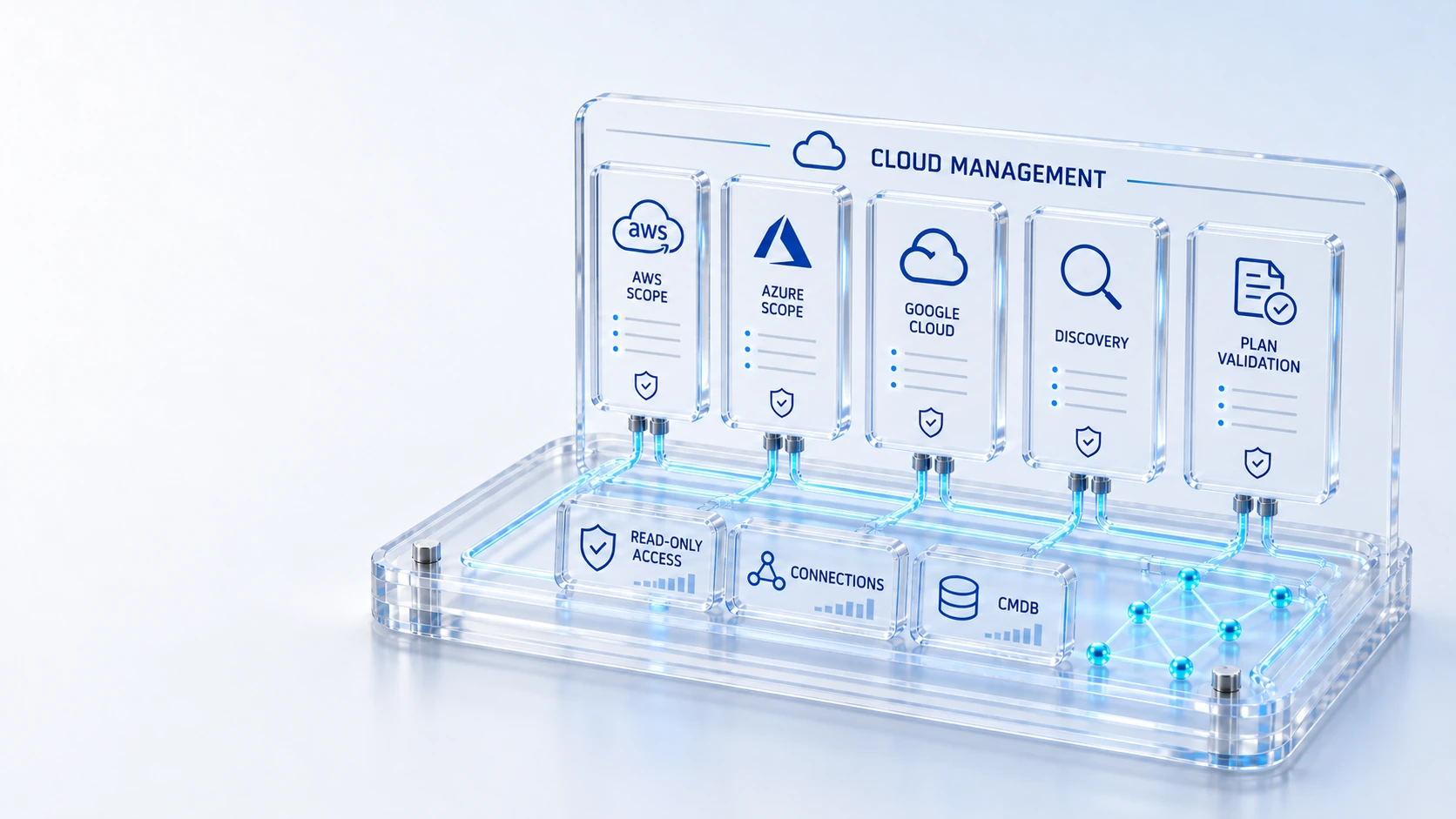
AWS ScopesConfigure AWS discovery scope and verify supported read-only provider access.
Azure ScopesConfigure Azure subscription scope and supported connection validation.
Google Cloud ScopesConfigure Google Cloud scope with the authorized runtime or impersonation identity.
Read-Only VerificationTrack successful connector verification separately from configured scope.
ConfigureVerify
Use shared discovery identities and CMDB relationships across cloud planning, connection validation and FinOps governance.
Configure AWS discovery scope and verify supported read-only provider access.
Configure Azure subscription scope and supported connection validation.
Configure Google Cloud scope with the authorized runtime or impersonation identity.
Track successful connector verification separately from configured scope.
Configure → Verify → Validate
Explore the details below, then bring your workflow, source data and questions to a guided conversation.
Built into the platform
Configure AWS discovery scope and verify supported read-only provider access.
Configure Azure subscription scope and supported connection validation.
Configure Google Cloud scope with the authorized runtime or impersonation identity.
Track successful connector verification separately from configured scope.
Distinguish local policy checks from provider validation and resource execution.
Use recorded provider costs with explicit coverage and currency requirements.
Actual product view
See the running demo environment. Features and records are subject to your role, configuration and integrations.
Connected by design
Service records, configuration items, people, locations and evidence share the same operational foundation. Move from investigation to the related asset, service or customer workflow with clear ownership.
Explore the platform architectureImplementation context
Features depend on enabled modules, configured roles, source data and supported integrations. Agree your implementation scope and acceptance criteria during discovery.
Who this is for
A cloud foundation must align provider identity, discovery scope and billing coverage before teams rely on shared operational context. Configuration, successful read-only verification, local plan checks and resource execution must remain clearly distinguishable. An evaluation of Cloud Foundation should make those boundaries inspectable before the team relies on the operating view.
Illustrative walkthrough
A fictional enterprise establishes AWS, Azure and Google Cloud evaluation scopes. Its architects review the supported identities, discovery configuration and billing evidence, then test a structured plan while documenting that live creation is disabled in the demonstration deployment.
Inspect AWS, Azure or Google Cloud scope configuration and the authorized provider identity, including runtime or impersonation identity where applicable to the supported connection. Configure AWS discovery scope and verify supported read-only provider access.
Review the connector verification outcome separately from configured scope, then inspect the confirmed discovery context reused by the shared CMDB and cloud workspace. Configure Google Cloud scope with the authorized runtime or impersonation identity.
Separate local policy validation from provider validation and execution, and confirm currency and coverage requirements before recorded provider costs inform a FinOps review. Distinguish local policy checks from provider validation and resource execution.
An architecture reviewer should see the configured provider identity, successful read-only verification evidence, confirmed inventory and a qualified billing period without treating one state as proof of the others. Use demonstration records and preserve the applicable reporting scope.
Explore the platform
Open a workspace for a closer look.
Prepare the evaluation
These are evaluation criteria, not promised outcomes. Agree the baseline, scope, source coverage and acceptance method with the responsible owners before drawing conclusions.
Questions for this topic
No. AWS, Azure and Google Cloud require their supported scopes and identities, and the evaluator should inspect the actual connector permissions and verification result for each provider.
No. Local policy checks, provider validation and resource execution are separate states; live resource creation is disabled by policy in the current demonstration deployment.
No. Recorded billing requires explicit completeness and currency qualification, so missing or incomplete data should not be interpreted as zero cost or used as a verified savings baseline.
Your next operating chapter
Bring one workflow, one service challenge or one part of your estate. We’ll show you where Qintorava fits.