Workflow Coverage
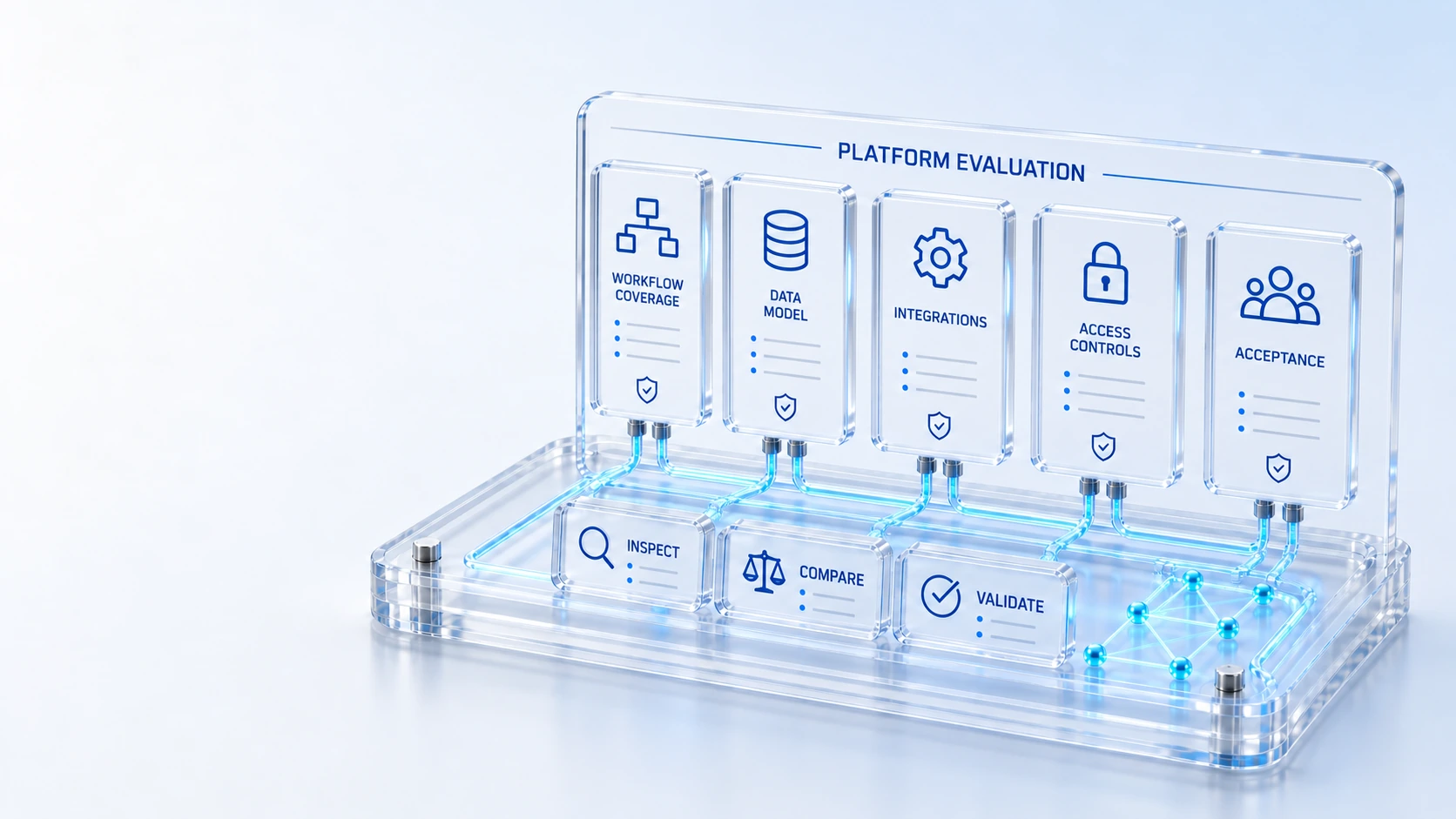
Walk through incidents, changes, requests, cases and field work with your own operating scenario.
Workflow CoverageWalk through incidents, changes, requests, cases and field work with your own operating scenario.
Shared ContextInspect how configuration, service offerings, assets, people and customer accounts connect.
Access and GovernanceTest record and field permissions, configured approvals, activity and source visibility.
Integration ReadinessIdentify supported providers, required permissions, data coverage and external boundaries.
InspectCompare
Evaluate Qintorava alongside Ivanti using matched request, hardware custody and software lifecycle scenarios, while separating endpoint administration requirements.
Walk through incidents, changes, requests, cases and field work with your own operating scenario.
Inspect how configuration, service offerings, assets, people and customer accounts connect.
Test record and field permissions, configured approvals, activity and source visibility.
Identify supported providers, required permissions, data coverage and external boundaries.
Inspect → Compare → Validate
Explore the details below, then bring your workflow, source data and questions to a guided conversation.
Your evaluation framework
Walk through incidents, changes, requests, cases and field work with your own operating scenario.
Inspect how configuration, service offerings, assets, people and customer accounts connect.
Test record and field permissions, configured approvals, activity and source visibility.
Identify supported providers, required permissions, data coverage and external boundaries.
Review retrieval context, confidence indicators, fallback behavior and human decisions.
Agree data quality, migration, enabled modules, measurable acceptance and commercial terms.
Inspect the suite
Unite incidents, major incidents, problems, changes and requests with service context, accountable ownership and AI assistance.
Explore 02 / assetsConnect procurement, custody, inventory, stockrooms, warranty, leases, maintenance, disposal and employee recovery to the same hardware CIs.
Explore 03 / customerConnect account context, installed assets, entitlements, business service levels, playbooks, major cases and technical recovery.
Explore 04 / customerCoordinate qualified dispatch, work orders, appointments, recurring schedules and verified completion with cases and incidents.
Explore 05 / infrastructureConnect typed CIs, dependencies, service portfolios, services and offerings to hardware, software and customer operations.
Explore 06 / infrastructureConfigure AWS, Azure and Google Cloud scopes, verify read-only connections, discover resources and validate infrastructure intent.
ExploreWho this is for
Evaluate service requests, hardware custody and software lifecycle with the same scenario and evidence requirements. Product editions, add-ons and implementation choices can differ. This page provides a provider-specific test agenda rather than an assertion that either vendor universally includes or lacks a capability.
Illustrative walkthrough
A buyer evaluates the service request and asset lifecycle surrounding a device. Compare equivalent hardware, software-rights and source-inventory assumptions, while separating asset intelligence from endpoint administration or security functions.
Define the starting service request, hardware identity, custodian, lifecycle state and relevant software records. Ask which source systems establish inventory and rights. Keep licensing and endpoint-management requirements explicit so the comparison does not silently change scope.
Inspect fulfillment, assignment, recovery and review of the recorded asset state. For software, distinguish installations, usage and rights before discussing renewal or reclamation. Record the evidence behind each decision and the human responsibility for approving it.
List endpoint control, patching, security and discovery functions that remain with existing tools unless explicitly supported and agreed. Compare implementation, data reconciliation, integrations and ongoing operating responsibility alongside the commercial proposal.
For this illustrative evaluation, retain the starting records, the decisions made by each accountable role, and the evidence that supports completion. Agree the scope and acceptance criteria before interpreting a demonstration as production readiness.
Explore the platform
Open a workspace for a closer look.
Prepare the evaluation
These are evaluation criteria, not promised outcomes. Agree the baseline, scope, source coverage and acceptance method with the responsible owners before drawing conclusions.
Questions for this topic
No. Recorded hardware and software lifecycle context should not be assumed to include device administration, patch deployment or endpoint security. Identify those requirements separately and confirm the supported scope and any integrations in the proposed solution.
No. Installations, usage, entitlement records, license terms and reconciliation decisions all matter. A demonstration can help inspect recorded context, but legal licensing conclusions and procurement decisions require the relevant evidence and responsible review.
Use the same inventory sources, hardware identities, custody states, software rights and lifecycle scenario for each provider. Identify integration, reconciliation and administration work in each proposal before drawing conclusions about cost or coverage.
Your next operating chapter
Bring one workflow, one service challenge or one part of your estate. We’ll show you where Qintorava fits.