Workflow Coverage
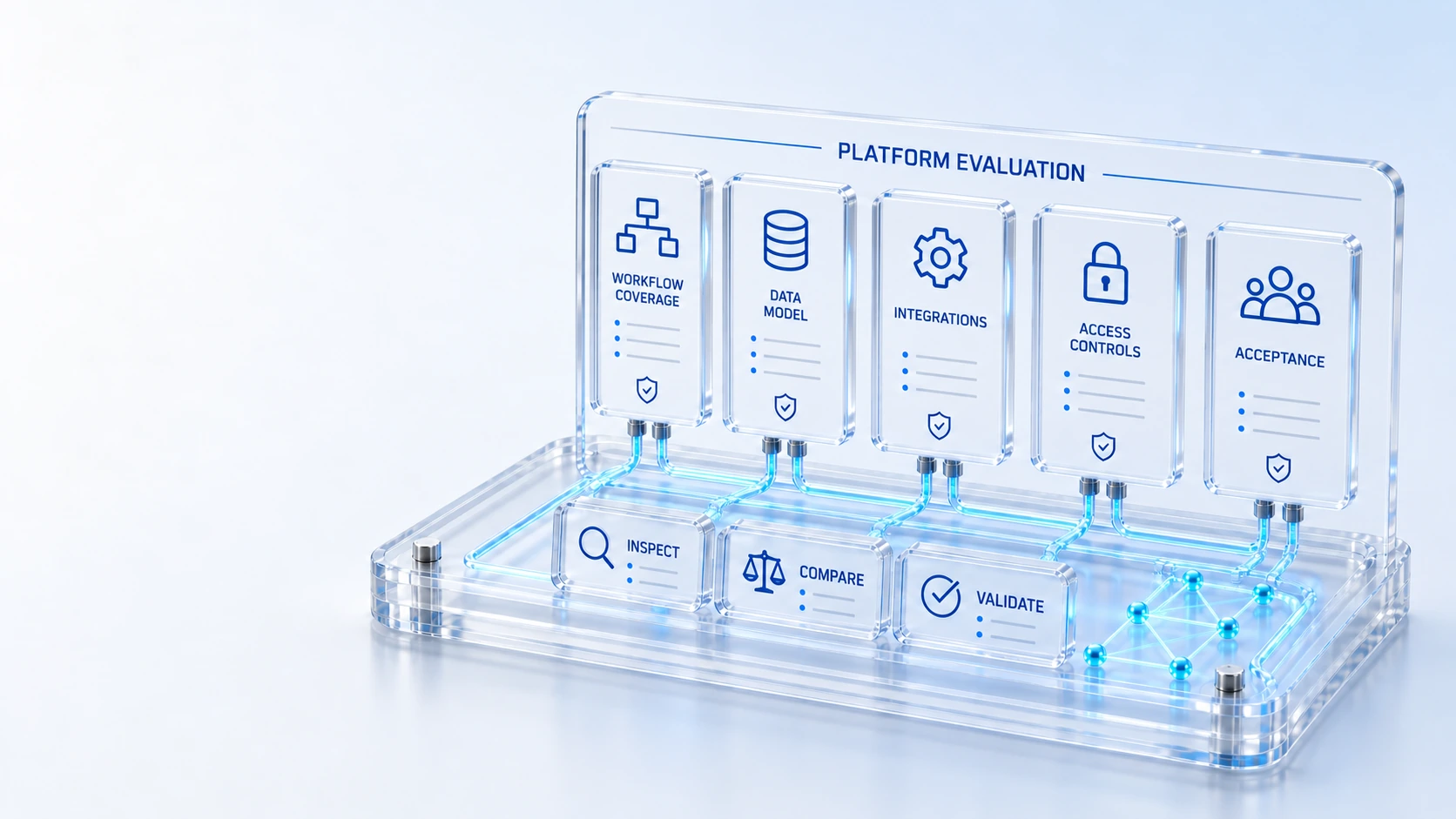
Walk through incidents, changes, requests, cases and field work with your own operating scenario.
Workflow CoverageWalk through incidents, changes, requests, cases and field work with your own operating scenario.
Shared ContextInspect how configuration, service offerings, assets, people and customer accounts connect.
Access and GovernanceTest record and field permissions, configured approvals, activity and source visibility.
Integration ReadinessIdentify supported providers, required permissions, data coverage and external boundaries.
InspectCompare
Evaluate Qintorava alongside BMC Helix through matched event, configuration and incident scenarios, source coverage and delivery responsibilities.
Walk through incidents, changes, requests, cases and field work with your own operating scenario.
Inspect how configuration, service offerings, assets, people and customer accounts connect.
Test record and field permissions, configured approvals, activity and source visibility.
Identify supported providers, required permissions, data coverage and external boundaries.
Inspect → Compare → Validate
Explore the details below, then bring your workflow, source data and questions to a guided conversation.
Your evaluation framework
Walk through incidents, changes, requests, cases and field work with your own operating scenario.
Inspect how configuration, service offerings, assets, people and customer accounts connect.
Test record and field permissions, configured approvals, activity and source visibility.
Identify supported providers, required permissions, data coverage and external boundaries.
Review retrieval context, confidence indicators, fallback behavior and human decisions.
Agree data quality, migration, enabled modules, measurable acceptance and commercial terms.
Inspect the suite
Unite incidents, major incidents, problems, changes and requests with service context, accountable ownership and AI assistance.
Explore 02 / assetsConnect procurement, custody, inventory, stockrooms, warranty, leases, maintenance, disposal and employee recovery to the same hardware CIs.
Explore 03 / customerConnect account context, installed assets, entitlements, business service levels, playbooks, major cases and technical recovery.
Explore 04 / customerCoordinate qualified dispatch, work orders, appointments, recurring schedules and verified completion with cases and incidents.
Explore 05 / infrastructureConnect typed CIs, dependencies, service portfolios, services and offerings to hardware, software and customer operations.
Explore 06 / infrastructureConfigure AWS, Azure and Google Cloud scopes, verify read-only connections, discover resources and validate infrastructure intent.
ExploreWho this is for
Evaluate event, configuration and operational response workflows with the same scenario and evidence requirements. Product editions, add-ons and implementation choices can differ. This page provides a provider-specific test agenda rather than an assertion that either vendor universally includes or lacks a capability.
Illustrative walkthrough
An operations team evaluates how a recorded event relates to an affected configuration item and accountable incident work. Use the same event source and configuration assumptions for both proposed environments, including gaps in coverage.
Identify the event source, canonical CI identity, relationship coverage and responsible service team. Ask how duplicates, missing identities and incomplete context are handled. A complete-looking diagram is not proof that every source measurement is available.
Trace the same example from event context to the related operational record and incident responsibility. Review what is observed, configured or supplied by an integration. Keep source events, alerts and incidents distinct when documenting the demonstration.
Compare the proposed source coverage, integration responsibilities, data retention, migration approach and support scope. Decide which existing operational tools remain authoritative. An evaluation of recorded context does not establish a replacement for every monitoring or automation function.
For this illustrative evaluation, retain the starting records, the decisions made by each accountable role, and the evidence that supports completion. Agree the scope and acceptance criteria before interpreting a demonstration as production readiness.
Explore the platform
Open a workspace for a closer look.
Prepare the evaluation
These are evaluation criteria, not promised outcomes. Agree the baseline, scope, source coverage and acceptance method with the responsible owners before drawing conclusions.
Questions for this topic
Use a defined event, known configuration identity, affected service and accountable response workflow. Include incomplete or missing-source cases. This makes the assessment more useful than comparing dashboards that contain different records or cover different infrastructure.
No. Recorded relationships and monitoring coverage are different questions. Identify which measurements are present, how current they are and which source provides them. Missing telemetry should remain unknown rather than being interpreted as healthy operation.
A phased assessment can consider coexistence, subject to the supported interfaces and agreed scope. Identify authoritative sources, record ownership, access and integration responsibilities rather than assuming an immediate replacement or universal connector availability.
Your next operating chapter
Bring one workflow, one service challenge or one part of your estate. We’ll show you where Qintorava fits.