Configured Permissions
Review record, field and relationship access.
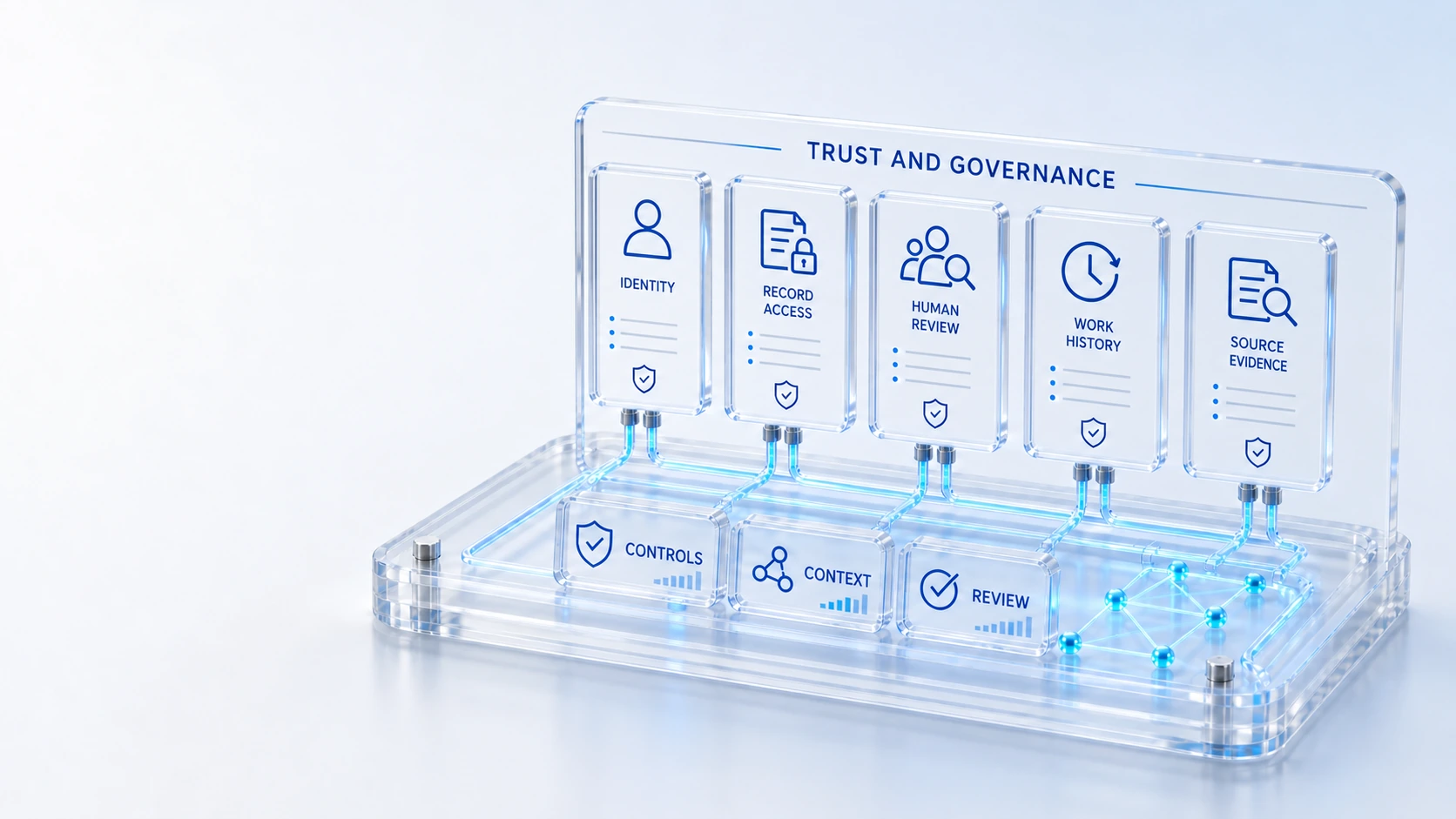
Configured PermissionsReview record, field and relationship access.
Accountable WorkflowsKeep approvals and work history with the record.
Inspectable EvidenceConnect activity, source context and attachments.
Your Governance RequirementsValidate controls and regulatory scope during discovery.
IdentityControls
Connect record permissions, activity, evidence and configured approval steps. Validate regulatory requirements during discovery.
Review record, field and relationship access.
Keep approvals and work history with the record.
Connect activity, source context and attachments.
Validate controls and regulatory scope during discovery.
Identity → Controls → Evidence
Explore the details below, then bring your workflow, source data and questions to a guided conversation.
Built into the platform
Maintain typed classes and canonical configuration records.
Traverse recorded relationships and location ancestry.
Coordinate onboarding, review and controlled offboarding.
Track assessments, review coverage and risk findings.
Summarize the records permitted in the current workspace.
Ask for guidance in the context of operational work.
Actual product view
See the running demo environment. Features and records are subject to your role, configuration and integrations.
Connected capabilities
Connect typed CIs, dependencies, service portfolios, services and offerings to hardware, software and customer operations.
Explore 02 / assetsConnect supplier onboarding, third-party risk, agreements, obligations, performance and controlled exit across enterprise operations.
Explore 03 / platformBring scoped AI overviews and record assistance into the workspace, with retrieval context, confidence indicators and human decisions.
ExploreImplementation context
Features depend on enabled modules, configured roles, source data and supported integrations. Agree your implementation scope and acceptance criteria during discovery.
Who this is for
Control discussions become difficult when permissions, approvals, activity and supporting files are spread across disconnected work. Operational governance needs traceable ownership and reviewable records, while regulatory requirements, evidence sufficiency and contractual obligations still require a separate assessment for the particular organization and implementation.
Illustrative walkthrough
An illustrative control owner wants to understand who reviewed a service decision and what evidence supported it. The team follows the related records, configured permissions, approval steps and activity rather than relying on a high-level claim that a workflow is automatically compliant.
Identify the service process, responsible owner and specific decision under review. Agree which records, configured approval steps and supporting evidence matter to that question. Keep the review bounded so a useful workflow inspection is not mistaken for an assessment of every applicable regulatory obligation.
Review the relevant record policies, authorized roles, activity and attachments. Follow the configured approval responsibility and available work history to see how the decision was made. Check whether the evidence is accessible to the appropriate reviewer without broadening access to unrelated or sensitive records.
Distinguish evidence present in the platform from requirements that need additional validation, documentation or external controls. Assign ownership for any gaps found during evaluation. Confirm the organization’s legal and control expectations separately before describing a workflow or implementation as satisfying a particular regulatory requirement.
Inspect the relationship between accountable owners, configured access, decision history and supporting records. This can support an operational control review; it does not establish a certification, audit opinion or universal compliance outcome for a customer or deployment.
Explore the platform
Open a workspace for a closer look.
Prepare the evaluation
These are evaluation criteria, not promised outcomes. Agree the baseline, scope, source coverage and acceptance method with the responsible owners before drawing conclusions.
Questions for this topic
No. It supports inspection of operational records, configured permissions, approvals and evidence. Your applicable requirements and evidence sufficiency must be evaluated for the specific implementation. Certifications, legal conclusions and contractual commitments should be confirmed through the appropriate separate review and documentation.
Approval context can help reviewers understand responsibility and the available decision evidence. Agree which records and steps are relevant, inspect their completeness and distinguish platform history from other controls or documents required by your organization’s audit and legal processes.
Access should reflect the review purpose and configured record, field and relationship permissions. Evaluate representative reviewer roles and permitted evidence before production use. A need to inspect one decision does not automatically justify access to unrelated customer, employee, supplier or operational information.
Your next operating chapter
Bring one workflow, one service challenge or one part of your estate. We’ll show you where Qintorava fits.