Customer Case
Capture the account, affected asset and configured coverage.
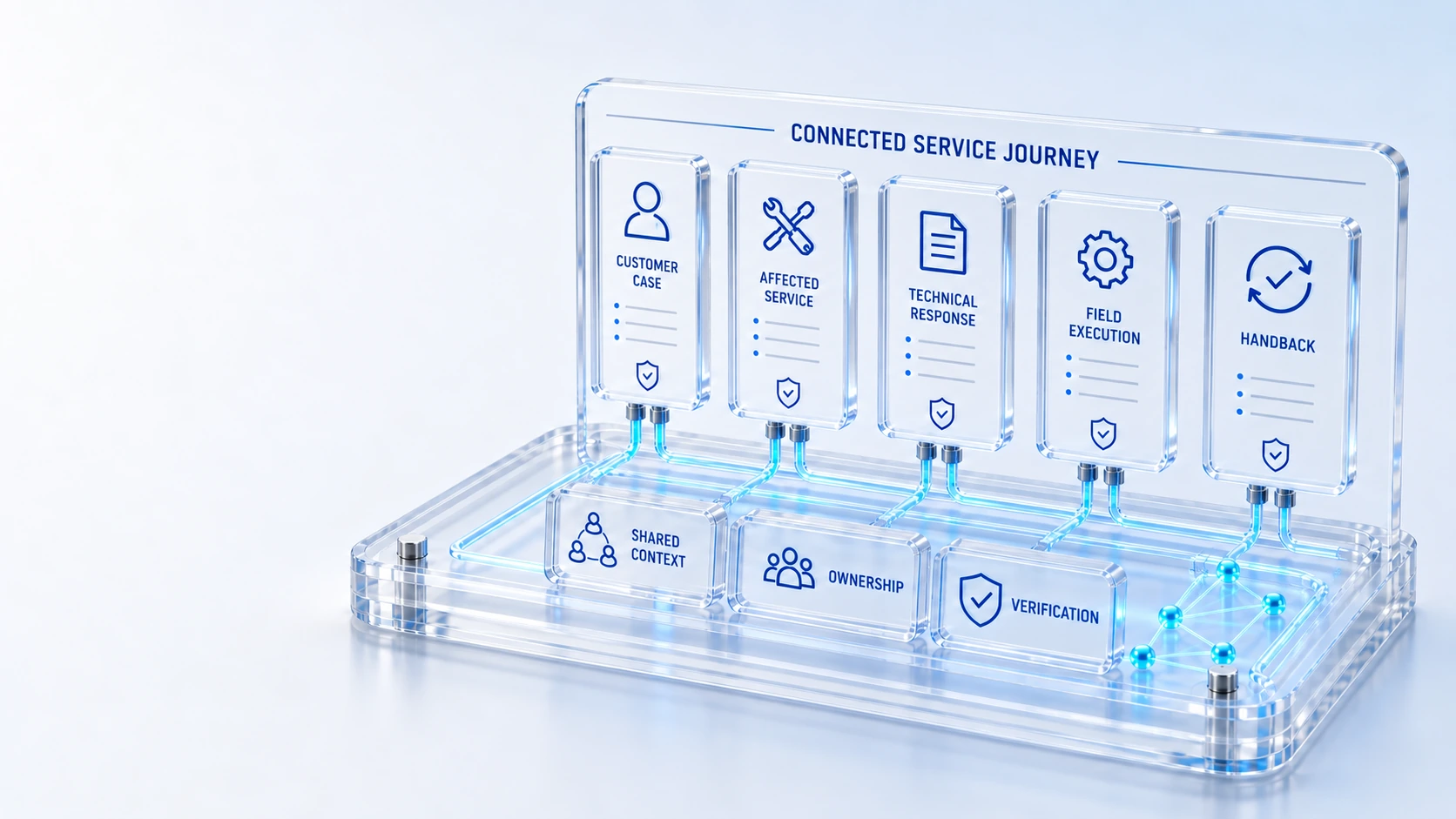
Customer CaseCapture the account, affected asset and configured coverage.
Technical ResponseLink incidents and recorded outages to the affected CI.
Qualified Field WorkCoordinate approved work plans, coverage and execution evidence.
Verified HandbackReturn completed work for support review and customer follow-up.
CaseTechnical response
Explore prospective operating pathways for service, asset, infrastructure, customer, field and leadership teams. These examples are not published customer endorsements.
Capture the account, affected asset and configured coverage.
Link incidents and recorded outages to the affected CI.
Coordinate approved work plans, coverage and execution evidence.
Return completed work for support review and customer follow-up.
Case → Technical response → Handback
Illustrative workflows, rather than published customer testimonials or measured outcomes.
A connected service journey
Keep customer context, technical recovery and qualified field work connected without collapsing their responsibilities.
Capture the account, affected asset and configured coverage.
Link incidents and recorded outages to the affected CI.
Coordinate approved work plans, coverage and execution evidence.
Return completed work for support review and customer follow-up.
Unite case ownership, entitlement, incident recovery and field execution in one connected service journey.
Explore 02 / CONNECTED PLATFORMConnect location coverage, qualifications, work plans and completion evidence before and after dispatch.
Explore 03 / CONNECTED PLATFORMConnect employee demand, custody, stockroom supply, lifecycle exposure and offboarding recovery.
Explore 04 / CONNECTED PLATFORMBring product, installation, entitlement, renewal and reclamation context into software decisions.
Explore 05 / CONNECTED PLATFORMConnect power, cooling, network, compute and customer equipment to governed on-site work.
Explore 06 / CONNECTED PLATFORMConnect discovery, identification, reconciliation, normalization and certification to canonical configuration records.
ExploreWho this is for
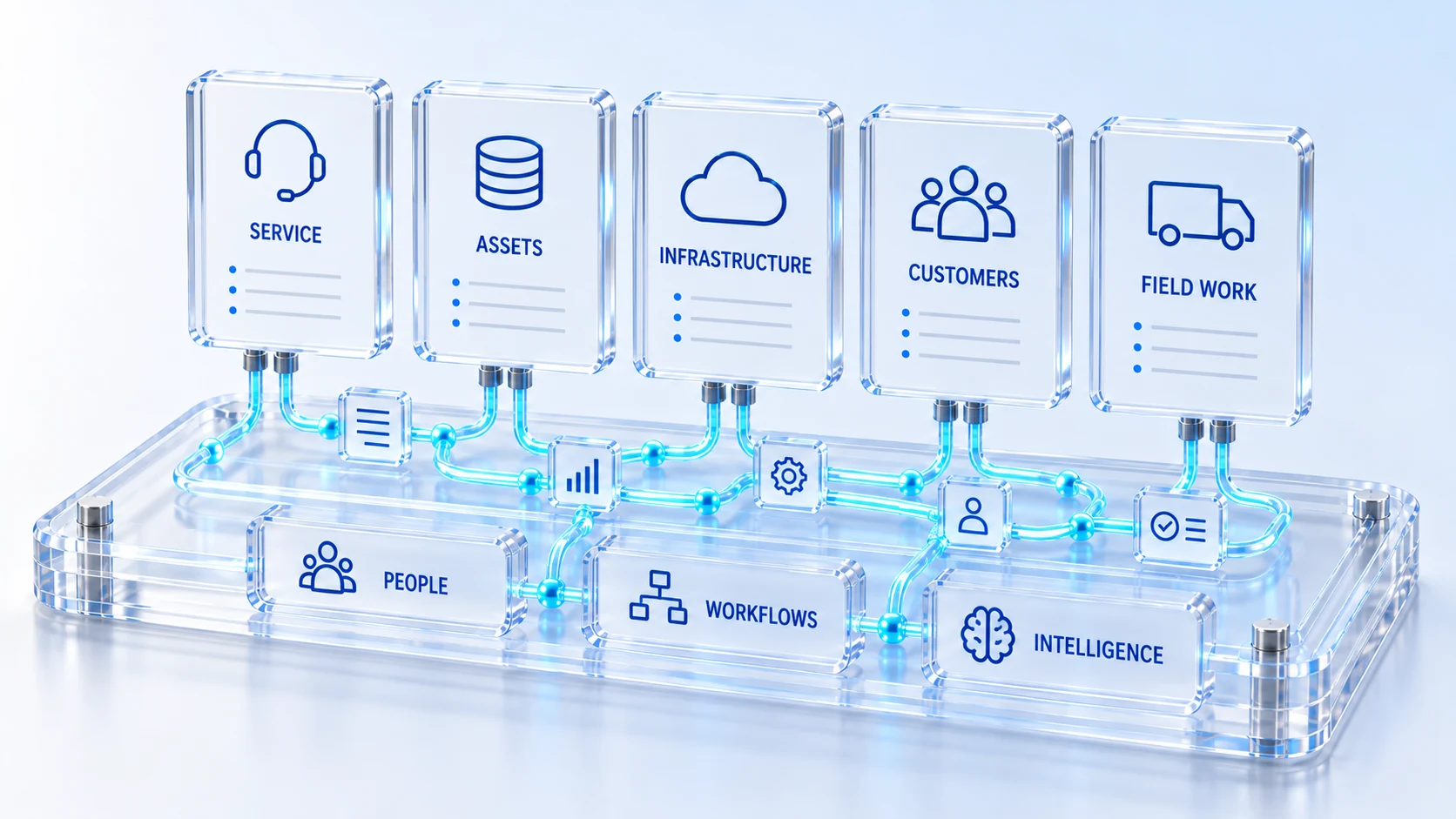
Different teams evaluate enterprise platforms from different starting points. The service desk sees work queues, asset teams see lifecycle records, customer support sees account commitments, and field coordinators see qualified execution. A useful evaluation connects those viewpoints without suggesting that every team has identical access or goals.
Illustrative walkthrough
These are prospective operating examples, not published customer testimonials. Imagine a customer support team working with internal technology and qualified field teams to resolve an issue involving a recorded asset at a service location.
Identify the first team’s starting record, decision and responsibility. A service agent may start with an incident, while an asset manager starts with custody or lifecycle state. Choose the product pathway that matches the work rather than relying on a generic platform demonstration.
Follow the related record to the next responsible team. Review which information needs to travel and which permissions must remain separate. A connected customer-to-field example should preserve customer communication, technical recovery and execution responsibilities throughout the journey.
List the records, access checks, handbacks and reporting scope that the participating teams need to inspect. Use those observations to decide whether the proposed implementation fits. Do not treat an attractive screen or an illustrative example as a measured customer outcome.
For this illustrative evaluation, retain the starting records, the decisions made by each accountable role, and the evidence that supports completion. Agree the scope and acceptance criteria before interpreting a demonstration as production readiness.
Explore the platform
Open a workspace for a closer look.
Prepare the evaluation
These are evaluation criteria, not promised outcomes. Agree the baseline, scope, source coverage and acceptance method with the responsible owners before drawing conclusions.
Questions for this topic
No. The pathways on this page describe prospective use cases and captured demonstration workspaces. They do not identify customer deployments or imply permission to publish a customer name, logo, endorsement or outcome.
A connected workflow benefits from the people who own its handoffs. Identify the service, asset, customer, infrastructure or field stakeholders you want involved and discuss a walkthrough that makes each team’s decisions and boundaries visible.
Yes, describe the workflow using aggregate, anonymized or synthetic information in the initial discussion. Do not submit sensitive production records through public forms. Agree confidentiality and an appropriate data-exchange method before sharing protected evaluation material.
Your next operating chapter
Bring one workflow, one service challenge or one part of your estate. We’ll show you where Qintorava fits.