Source Configuration
Define discovery sources, patterns and scope.
Source ConfigurationDefine discovery sources, patterns and scope.
Identification and ReconciliationBring inventory into canonical CI identities.
NormalizationUse governed classes, references and configuration context.
CertificationKeep data review connected to records.
ScopeDiscover
Connect discovery, identification, reconciliation, normalization and certification to canonical configuration records.
Define discovery sources, patterns and scope.
Bring inventory into canonical CI identities.
Use governed classes, references and configuration context.
Keep data review connected to records.
Scope → Discover → Reconcile
Explore the details below, then bring your workflow, source data and questions to a guided conversation.
Built into the platform
Maintain typed classes and canonical configuration records.
Traverse recorded relationships and location ancestry.
Maintain provider and infrastructure discovery configuration.
Define discovery behavior for supported sources.
Review inventory, capital exposure and lifecycle exceptions.
Manage hardware models and stored inventory.
Actual product view
See the running demo environment. Features and records are subject to your role, configuration and integrations.
Connected capabilities
Connect typed CIs, dependencies, service portfolios, services and offerings to hardware, software and customer operations.
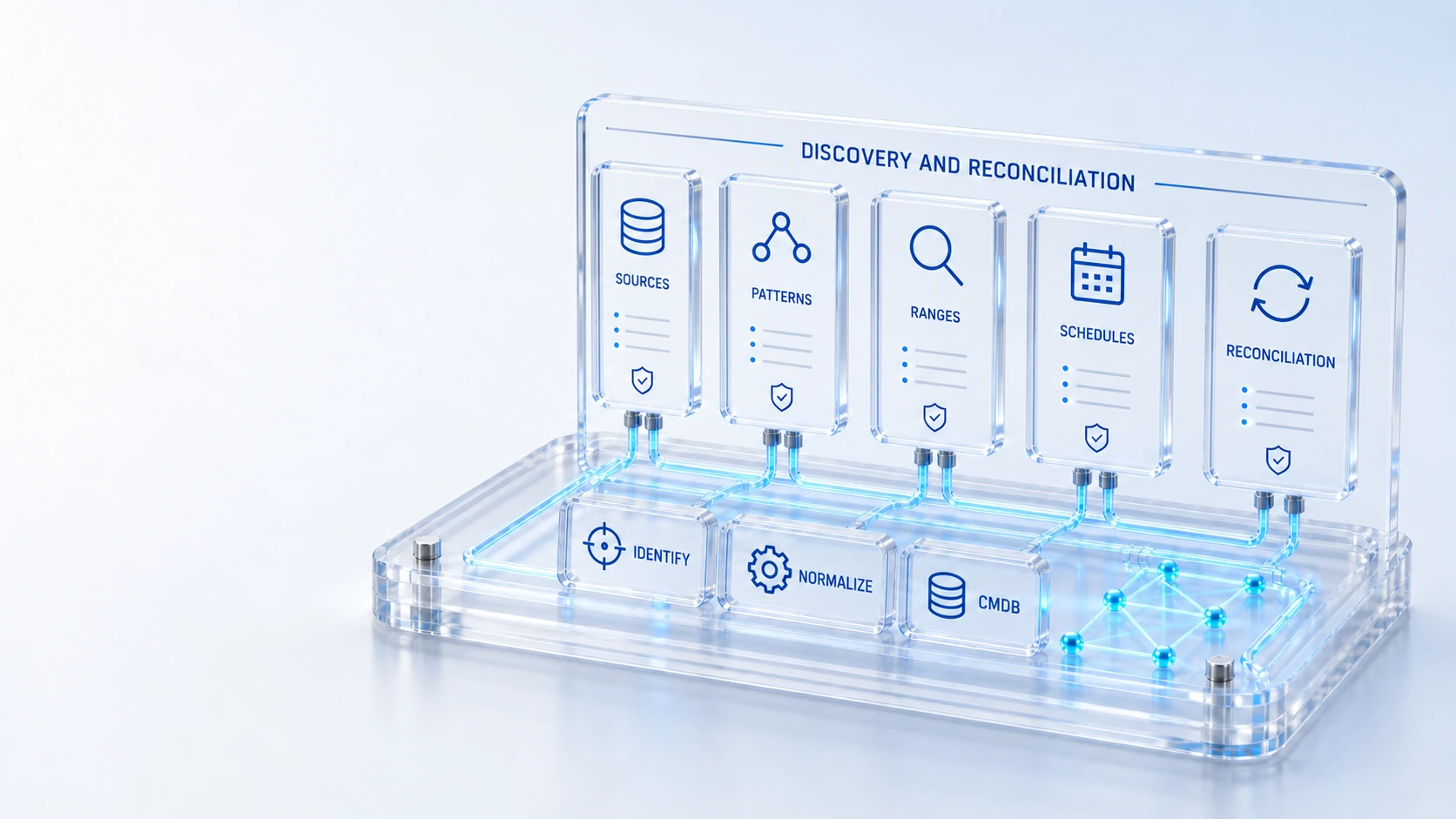
Explore 02 / infrastructureConfigure discovery sources, patterns, ranges and schedules, then reconcile confirmed inventory into the shared CMDB.
Explore 03 / assetsConnect procurement, custody, inventory, stockrooms, warranty, leases, maintenance, disposal and employee recovery to the same hardware CIs.
ExploreImplementation context
Features depend on enabled modules, configured roles, source data and supported integrations. Agree your implementation scope and acceptance criteria during discovery.
Who this is for
A configuration inventory becomes less useful when duplicate identities, conflicting sources and unclear relationships remain unresolved. Teams need a practical way to connect source lineage, identification, reconciliation and certification so operational decisions can distinguish trusted context from records that still require review.
Illustrative walkthrough
An illustrative service owner finds that discovery inputs describe the same equipment differently. The CMDB team examines source lineage and identification rules, reviews the canonical record and service relationships, then uses the certification process to make remaining data-quality responsibilities visible.
Identify the discovery sources, patterns and relevant schedules contributing to the record. Examine resource lineage and the available identifying information before deciding whether inputs represent one item or different items. Keep source uncertainty visible instead of simply choosing the most convenient description for the inventory.
Review identification and reconciliation against the canonical configuration record. Inspect related assets, services, offerings and dependencies where those relationships are available. Resolve conflicting context with the responsible owner so subsequent service work has a clear reference rather than relying on duplicate or ambiguous records.
Use data certification and accountable ownership to identify what has been reviewed and what remains incomplete. Evaluate the next discovery update against the agreed rules. Treat quality as ongoing operational work rather than a one-time declaration that every configuration record is permanently accurate.
Inspect source lineage, canonical identity, recorded relationships and certification context. These support a defensible data-quality discussion; they do not make an incomplete discovery estate complete or eliminate the need for owners to review conflicting or outdated information.
Explore the platform
Open a workspace for a closer look.
Prepare the evaluation
These are evaluation criteria, not promised outcomes. Agree the baseline, scope, source coverage and acceptance method with the responsible owners before drawing conclusions.
Questions for this topic
Discovery supplies observations from configured sources. A trusted operating model also needs identification, reconciliation, relationship ownership and review. Evaluate these together with representative records so the organization understands how observations become canonical context and what uncertainty remains after the update.
Asset and configuration records answer related but different questions. Custody, lifecycle and financial responsibility do not automatically establish service dependencies or canonical configuration identity. Inspect the connection between the records while preserving the ownership and purpose of each operational discipline.
Certification records a review within the configured process and available evidence. Relationships can still change as the environment changes or new sources arrive. Agree ownership, discovery coverage and follow-up responsibilities so certification supports continuing quality rather than an unsupported promise of permanent accuracy.
Your next operating chapter
Bring one workflow, one service challenge or one part of your estate. We’ll show you where Qintorava fits.