Employee Demand
Connect requests and replenishment to inventory.
Employee DemandConnect requests and replenishment to inventory.
Custody and SupplyTrack assignments, transfers, models and stockrooms.
Lifecycle ExposureInspect warranty, maintenance and lease context.
Offboarding RecoveryKeep recovery responsibility with the asset.
DemandCustody
Connect employee demand, custody, stockroom supply, lifecycle exposure and offboarding recovery.
Connect requests and replenishment to inventory.
Track assignments, transfers, models and stockrooms.
Inspect warranty, maintenance and lease context.
Keep recovery responsibility with the asset.
Demand → Custody → Recovery
Explore the details below, then bring your workflow, source data and questions to a guided conversation.
Built into the platform
Review inventory, capital exposure and lifecycle exceptions.
Manage hardware models and stored inventory.
Maintain typed classes and canonical configuration records.
Traverse recorded relationships and location ancestry.
Help users find and request available services.
Track the service work visible to the signed-in user.
Actual product view
See the running demo environment. Features and records are subject to your role, configuration and integrations.
Connected capabilities
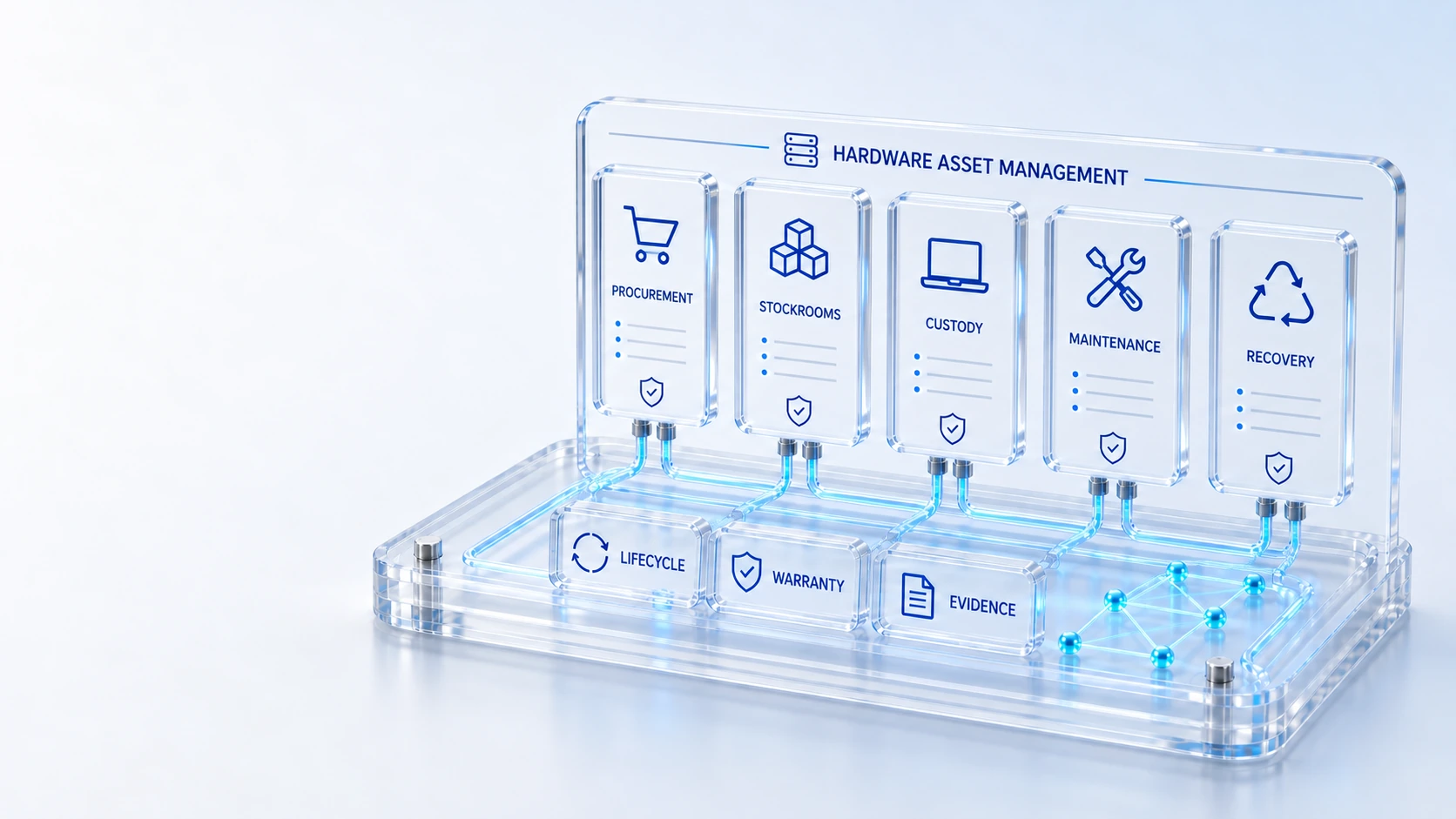
Connect procurement, custody, inventory, stockrooms, warranty, leases, maintenance, disposal and employee recovery to the same hardware CIs.
Explore 02 / infrastructureConnect typed CIs, dependencies, service portfolios, services and offerings to hardware, software and customer operations.
Explore 03 / serviceBring requests, knowledge, approvals, customer service and assigned field work into a role-aware portal.
ExploreImplementation context
Features depend on enabled modules, configured roles, source data and supported integrations. Agree your implementation scope and acceptance criteria during discovery.
Who this is for
Equipment can move between employees, stockrooms and locations while service requests remain in separate queues. Teams need a reliable record of custody, lifecycle exposure and recovery decisions so fulfillment and offboarding work have accountable owners and inspectable completion evidence.
Illustrative walkthrough
An illustrative organization needs to recover a departing employee’s laptop and return usable equipment to inventory. The asset manager reviews the recorded custodian, location and lifecycle position, while service staff coordinate the request and record what actually happens to the equipment.
Begin with the hardware record, assigned person, location and related service request. Check custody and lifecycle information against the available evidence. Resolve uncertain ownership before planning a return, and identify the stockroom or authorized team responsible for receiving the equipment.
Route the service work through the configured request and fulfillment process. Record the transfer, recovery or disposal decision in the appropriate asset context. Keep warranty, maintenance and lifecycle exceptions visible so the team does not treat every returned device as immediately reusable.
Review the completed service work alongside the asset’s final custody and location. Confirm that receiving responsibility and disposition evidence are recorded. Where data remains incomplete, retain an explicit follow-up rather than presenting an unresolved equipment return as a completed lifecycle event.
Inspect the custody trail, lifecycle exceptions, request linkage and final recorded disposition. These provide an evaluation basis for accountable recovery; they do not establish physical possession without the organization’s receiving process and supporting evidence.
Explore the platform
Open a workspace for a closer look.
Prepare the evaluation
These are evaluation criteria, not promised outcomes. Agree the baseline, scope, source coverage and acceptance method with the responsible owners before drawing conclusions.
Questions for this topic
A closed request is one part of the evidence. Evaluate whether the asset record, receiving ownership, location and disposition agree with the completed work. Your physical receiving and verification process determines whether the equipment has actually been recovered.
The platform connects request fulfillment with hardware context, custody and lifecycle work. Agree the applicable request, asset and stockroom process during discovery, then test representative transfers and exceptions with the roles and permissions proposed for your implementation.
Reuse depends on the recorded condition, lifecycle exposure, maintenance position and your organization’s disposition requirements. Evaluate the decision and receiving workflow rather than assume that a return automatically makes an asset fit for another employee or service.
Your next operating chapter
Bring one workflow, one service challenge or one part of your estate. We’ll show you where Qintorava fits.