Structured Service Intake
Connect the portal, catalog and request records.
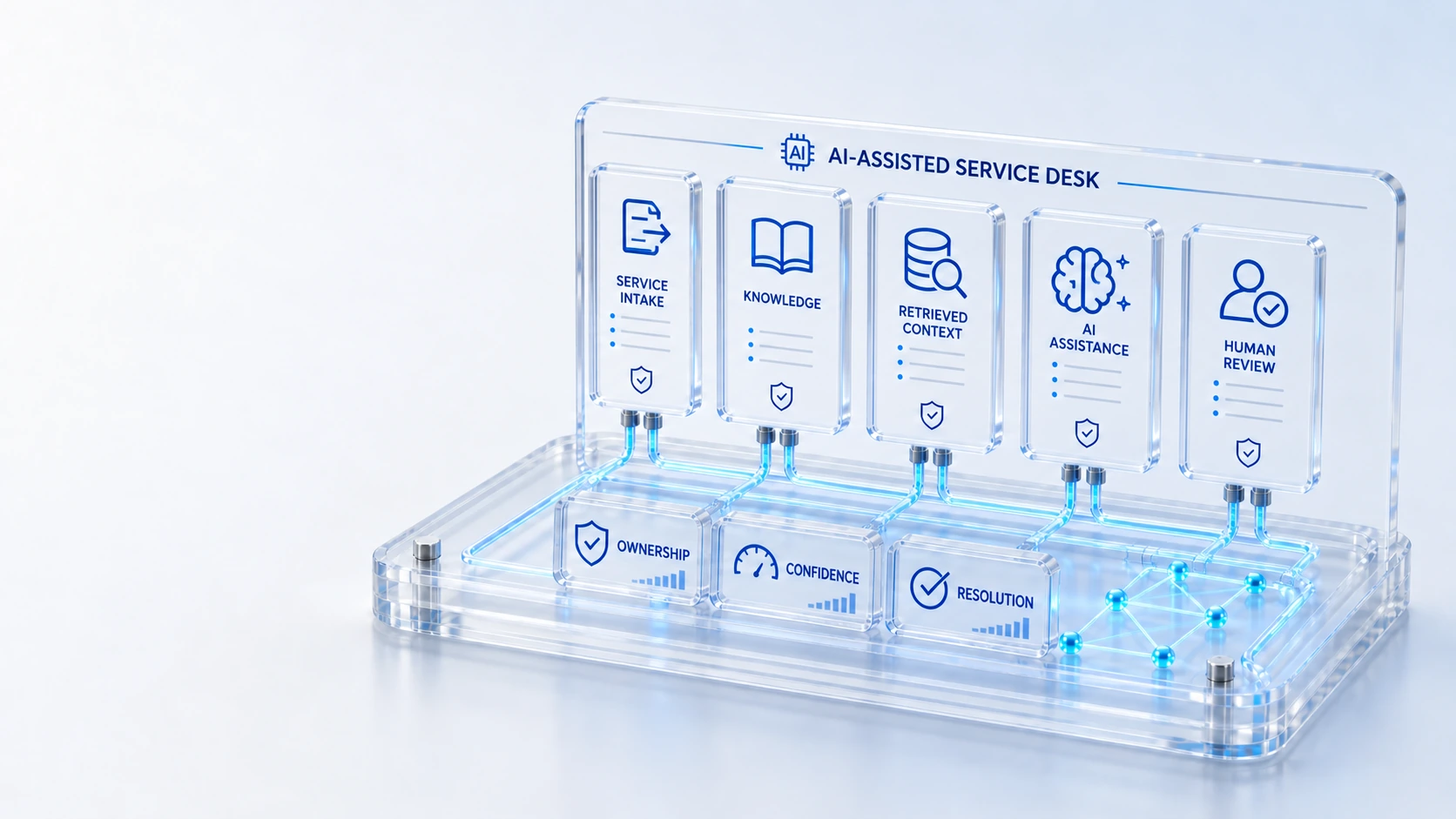
Structured Service IntakeConnect the portal, catalog and request records.
Knowledge in ContextBring governed articles and configured sources into support.
Scoped AI AssistanceReview retrieved context and confidence before using guidance.
Human AccountabilityKeep service decisions and fulfillment with your teams.
IntakeAssistance
Connect portal intake, knowledge and contextual assistance with accountable human service workflows.
Connect the portal, catalog and request records.
Bring governed articles and configured sources into support.
Review retrieved context and confidence before using guidance.
Keep service decisions and fulfillment with your teams.
Intake → Assistance → Ownership
Explore the details below, then bring your workflow, source data and questions to a guided conversation.
Built into the platform
Help users find and request available services.
Track the service work visible to the signed-in user.
Organize the knowledge available to your organization.
Maintain governed operational knowledge.
Manage priority, assignment, investigation and restoration in connected records.
Track recurring issues, root cause and known-error work.
Actual product view
See the running demo environment. Features and records are subject to your role, configuration and integrations.
Connected capabilities
Bring requests, knowledge, approvals, customer service and assigned field work into a role-aware portal.
Explore 02 / serviceManage knowledge bases, categories and external sources, and make knowledge available to service teams and portal users.
Explore 03 / serviceUnite incidents, major incidents, problems, changes and requests with service context, accountable ownership and AI assistance.
ExploreImplementation context
Features depend on enabled modules, configured roles, source data and supported integrations. Agree your implementation scope and acceptance criteria during discovery.
Who this is for
Employees often repeat their issue across portal searches, knowledge pages and service queues. A useful service experience connects the request, relevant information and responsible team while keeping access boundaries and human decisions clear when assistance cannot safely resolve the next step.
Illustrative walkthrough
In this illustrative scenario, an employee seeks help with a workplace service through the portal. The service team wants relevant knowledge and contextual assistance to support the interaction, while retaining a clear request record, ownership and fulfillment path when further work is required.
Use the configured portal, catalog and knowledge experience to establish what the person needs. Review the relevant article or service item within that user’s access. Keep the employee’s own requests and work visible without exposing other people’s records or unrelated customer contexts.
Bring the available knowledge and record context into the service interaction. Inspect retrieved information and confidence where assistance is used. An authorized person reviews the proposed next step; the workflow should not equate a generated answer with permission to perform a privileged action.
Create or continue the appropriate service request when knowledge alone is insufficient. Carry the relevant context into assignment and fulfillment, and let the requester follow permitted progress. Review the resulting work history to understand where knowledge helped and where accountable service delivery remained necessary.
Evaluate the connection between portal intake, knowledge access, contextual guidance and assigned service work. The evidence should show who owned the next step and what information supported it, without interpreting assistance as guaranteed ticket avoidance.
Explore the platform
Open a workspace for a closer look.
Prepare the evaluation
These are evaluation criteria, not promised outcomes. Agree the baseline, scope, source coverage and acceptance method with the responsible owners before drawing conclusions.
Questions for this topic
No. Evaluate contextual assistance, available sources and the configured workflow separately from authorization to act. Privileged changes require the appropriate permissions and agreed controls; a useful answer or confidence indicator does not by itself authorize service execution.
The evaluation should follow the request into accountable service work. Test how context, ownership and permitted status are preserved when a person or specialist team must investigate, approve or fulfill the request rather than assume that all interactions can be self-resolved.
The visible experience depends on configured roles, permissions, available knowledge and enabled services. Include representative employee and service-team personas in discovery so you can inspect appropriate access, useful content and the handling of requests outside the initial service scope.
Your next operating chapter
Bring one workflow, one service challenge or one part of your estate. We’ll show you where Qintorava fits.