Incident and Major Incident Response
Manage priority, assignment, investigation and restoration in connected records.
Incident and Major Incident ResponseManage priority, assignment, investigation and restoration in connected records.
Problem ManagementTrack recurring issues, root cause and known-error work.
Knowledge BasesOrganize the knowledge available to your organization.
Article RecordsMaintain governed operational knowledge.
IntakeOwnership
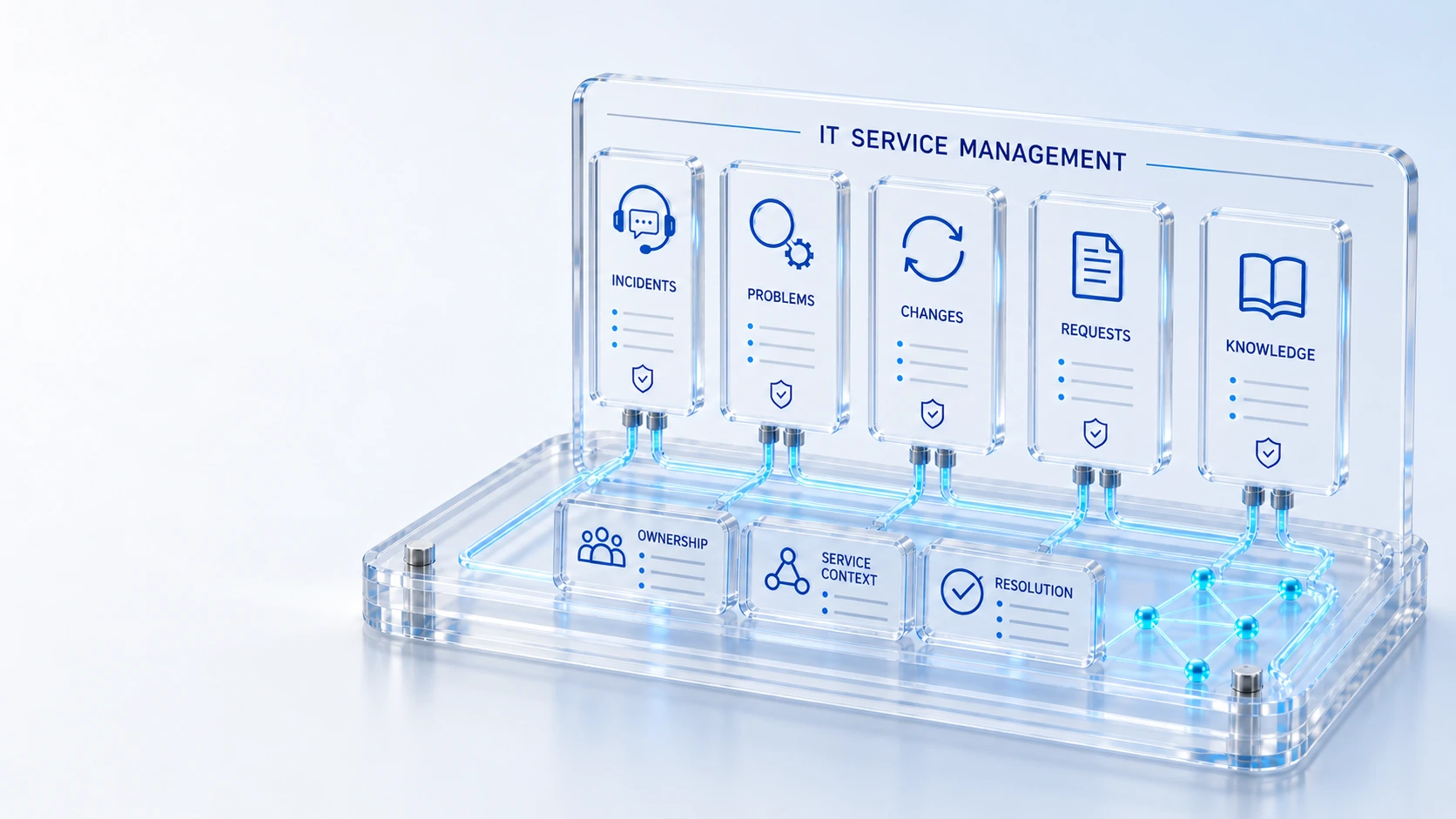
Bring incident, problem, change, request, knowledge and service level workflows into one platform.
Manage priority, assignment, investigation and restoration in connected records.
Track recurring issues, root cause and known-error work.
Organize the knowledge available to your organization.
Maintain governed operational knowledge.
Intake → Ownership → Resolution
Explore the details below, then bring your workflow, source data and questions to a guided conversation.
Built into the platform
Manage priority, assignment, investigation and restoration in connected records.
Track recurring issues, root cause and known-error work.
Organize the knowledge available to your organization.
Maintain governed operational knowledge.
Maintain response and resolution commitments.
Apply configured calendars and pause rules to supported workflows.
Actual product view
See the running demo environment. Features and records are subject to your role, configuration and integrations.
Connected capabilities
Unite incidents, major incidents, problems, changes and requests with service context, accountable ownership and AI assistance.
Explore 02 / serviceManage knowledge bases, categories and external sources, and make knowledge available to service teams and portal users.
Explore 03 / serviceConnect configured service levels and business calendars with customer cases, incidents and recorded outage intervals.
ExploreImplementation context
Features depend on enabled modules, configured roles, source data and supported integrations. Agree your implementation scope and acceptance criteria during discovery.
Who this is for
Service management becomes inconsistent when teams use one queue for interruptions, recurring problems, planned changes and routine requests. Organizations need distinct but connected processes, relevant knowledge and configured service commitments so the purpose, ownership and evidence of each type of work remain understandable.
Illustrative walkthrough
An illustrative IT team receives a recurring interruption while also processing routine service requests. The process owner reviews the incident path, relates longer-term problem work and evaluates any proposed change separately, with knowledge and service-level context supporting the appropriate responsibilities.
Distinguish an interruption requiring incident response from a recurring issue requiring problem investigation, a planned change or a catalog request. Inspect the relevant record and assignment context. The first evaluation should show clear process intent rather than force every kind of service work into the same undifferentiated queue.
Relate the service work to knowledge, configuration items and the relevant business calendar or service commitments. Preserve incident, problem, change and request ownership where those processes intersect. Review the links so context travels with the work without implying that completing one record automatically fulfills every related responsibility.
Follow the configured review, fulfillment or restoration process and inspect the resulting work history. Consider candidate measures appropriate to each discipline and available source coverage. Agree acceptance criteria with the process owners instead of treating a product label or process framework reference as evidence of a complete operating model.
Inspect the distinction and connection between incident, problem, change, request, knowledge and service-level work. The demonstration can support process evaluation; it does not represent an ITIL certification or prove that a customer’s service management process satisfies every framework practice.
Explore the platform
Open a workspace for a closer look.
Prepare the evaluation
These are evaluation criteria, not promised outcomes. Agree the baseline, scope, source coverage and acceptance method with the responsible owners before drawing conclusions.
Questions for this topic
The reviewed platform includes incident and major incident response, problem management, change governance, request fulfillment, knowledge and service commitments. Evaluate those capabilities with your process owners and representative scenarios so the implementation reflects your operating model and configured responsibilities rather than a generic queue.
No. References to service management and ITIL workflows describe relevant process areas, not a certification or assurance about your organization. Agree the practices, evidence and implementation scope required by your teams, and confirm any formal certification question separately through the appropriate review.
Incident restoration and problem investigation serve different purposes. A restored service may still require root-cause work, known-error context or a governed change. Evaluate how related records maintain ownership and evidence so a short-term recovery does not silently replace the longer-term prevention responsibility.
Your next operating chapter
Bring one workflow, one service challenge or one part of your estate. We’ll show you where Qintorava fits.