Service Work
Coordinate incidents, changes, requests and knowledge.
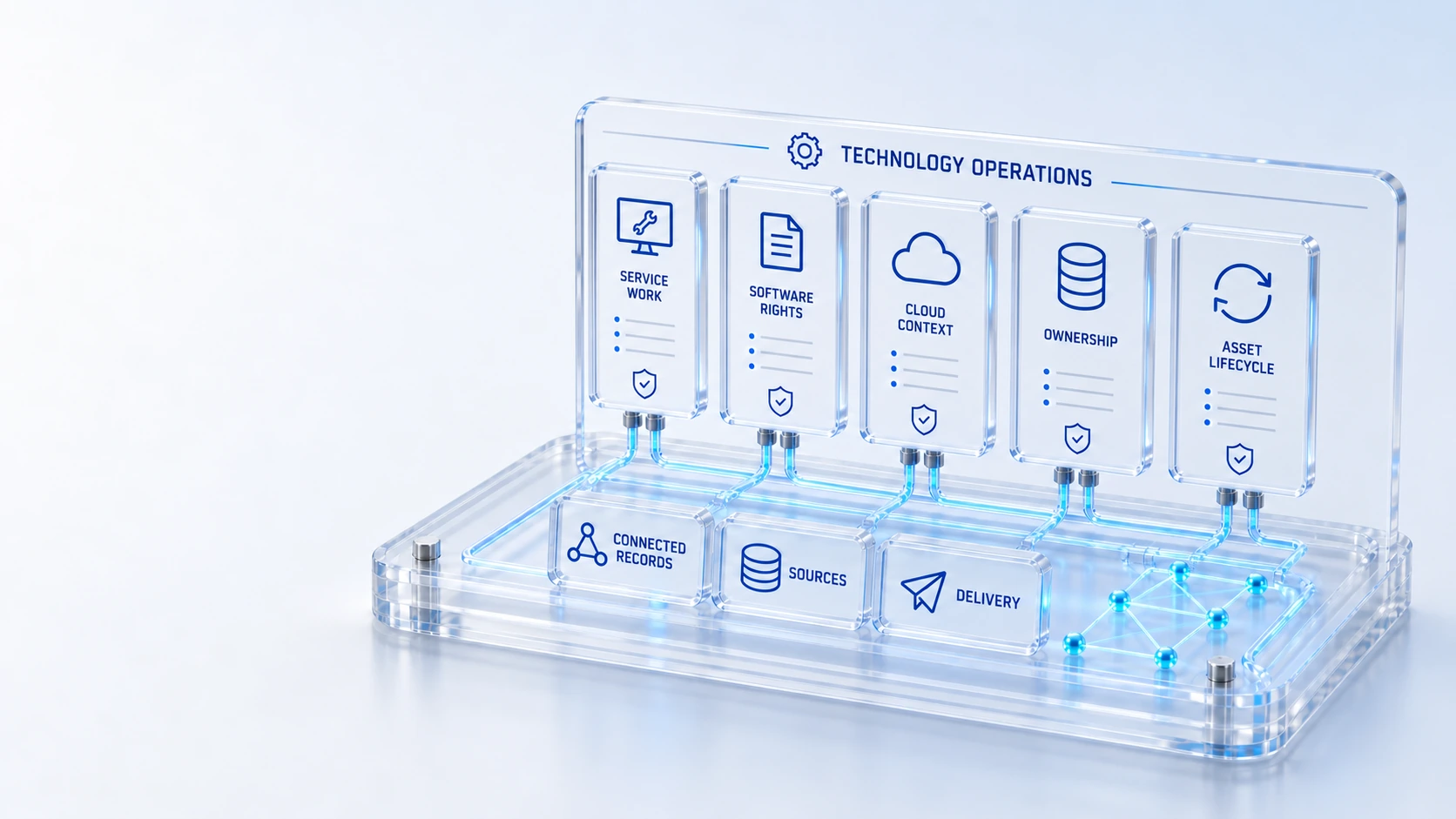
Service WorkCoordinate incidents, changes, requests and knowledge.
Software RightsReview products, installations and licenses.
Cloud OperationsConnect provider scope and plan validation.
Shared ResponsibilityKeep ownership across team boundaries.
ContextWork
Bring service work, software rights and cloud context together without fragmenting ownership.
Coordinate incidents, changes, requests and knowledge.
Review products, installations and licenses.
Connect provider scope and plan validation.
Keep ownership across team boundaries.
Context → Work → Evidence
Use cases describe technology and service operations. Requirements and implementation scope are reviewed during discovery.
Built into the platform
Track configured provider scopes and connection verification separately.
Create and locally validate structured infrastructure plans.
Manage priority, assignment, investigation and restoration in connected records.
Track recurring issues, root cause and known-error work.
Inspect the software estate and license position.
Maintain software product CIs in the shared CMDB.
Actual product view
See the running demo environment. Features and records are subject to your role, configuration and integrations.
Connected capabilities
Configure AWS, Azure and Google Cloud scopes, verify read-only connections, discover resources and validate infrastructure intent.
Explore 02 / serviceUnite incidents, major incidents, problems, changes and requests with service context, accountable ownership and AI assistance.
Explore 03 / assetsConnect software product CIs, installation records, licenses, contracts, usage and reclamation in one software asset workspace.
ExploreImplementation context
Industry examples illustrate technology and service operations use cases, not industry certification or regulatory compliance. Scope, integrations, access and service commitments are agreed during discovery.
Who this is for
Technology organizations also run internal services, employee equipment and software obligations that can be overlooked in cloud-focused discussions. Teams need to connect service demand, recorded software rights and relevant provider context while preserving the different evidence and responsibilities behind user support, license decisions and infrastructure work.
Illustrative walkthrough
In this illustrative scenario, a technology company evaluates a staff request related to software and a cloud-supported service. The service owner reviews the request and permitted fulfillment path, while software and cloud specialists inspect their relevant recorded context before agreeing the next accountable step.
Review the employee request, relevant catalog or service context and responsible support team. Clarify the user need before drawing conclusions about software rights or cloud changes. Keep access to the requester’s work and related records aligned with the configured role rather than treating internal users as unrestricted administrators.
Bring software product, installation, entitlement or renewal context into the review where relevant. Inspect cloud provider scope and verification separately if the service depends on it. Preserve the distinction between a recorded installation, a contractual right and authorization to alter the supporting cloud environment.
Follow the configured service and review process for the next step, retaining the relevant software or cloud context. Inspect work history and unresolved exceptions with the responsible owners. Use the evaluation to clarify internal operating responsibilities rather than assume a broad technology platform makes every access or licensing decision automatically.
Inspect internal service work, recorded software evidence and relevant cloud boundaries in one realistic employee journey. This supports technology operations planning, without proving complete license compliance, automatic access fulfillment or the readiness of every corporate system for integration.
Explore the platform
Open a workspace for a closer look.
Prepare the evaluation
These are evaluation criteria, not promised outcomes. Agree the baseline, scope, source coverage and acceptance method with the responsible owners before drawing conclusions.
Questions for this topic
This page focuses on the internal technology organization: employee service work, software rights and related cloud context. The Technology and SaaS scenario emphasizes provider scope, operational signals and service cost evidence. Both are illustrative paths, and discovery should select the journey that matches your actual operating responsibilities.
No. A request expresses a service need, while software rights depend on the relevant agreements and recorded evidence. Evaluate the configured review process with software and commercial owners before fulfilling the request, and distinguish user demand from a confirmed entitlement or authorized deployment decision.
The platform’s operating foundation connects service and cloud context, subject to configured access and available sources. Evaluate the relevant records and owners with a representative request. Sharing context does not mean every service agent should receive provider credentials or permission to perform privileged infrastructure changes.
Your next operating chapter
Bring one workflow, one service challenge or one part of your estate. We’ll show you where Qintorava fits.