Customer Context
Connect accounts, cases and configured coverage.
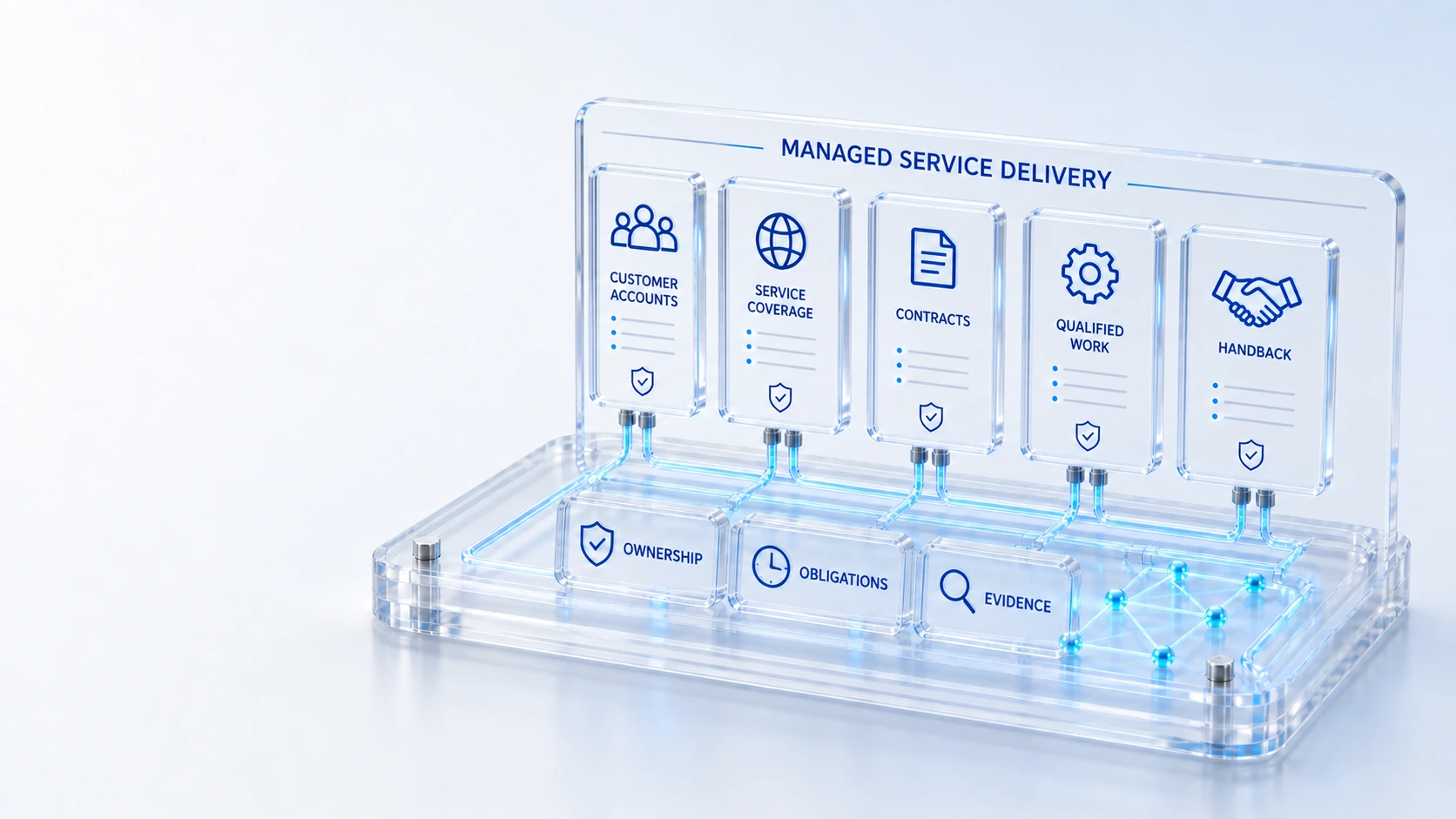
Customer ContextConnect accounts, cases and configured coverage.
Supplier AgreementsKeep obligations and responsibilities visible.
Qualified DeliveryCoordinate field work with the service record.
Evidence and HandbackReview completion with the accountable support team.
AccountDelivery
Bring account-aware cases, contracts, qualified vendor work and service evidence together.
Connect accounts, cases and configured coverage.
Keep obligations and responsibilities visible.
Coordinate field work with the service record.
Review completion with the accountable support team.
Account → Delivery → Handback
Explore the details below, then bring your workflow, source data and questions to a guided conversation.
Built into the platform
Validate customer, contact and affected-CI relationships.
Match configured contracts and service coverage.
Coordinate onboarding, review and controlled offboarding.
Track assessments, review coverage and risk findings.
Check skills, expiry, coverage, workload and resource absence.
Use published plans, dependencies and required checklists.
Actual product view
See the running demo environment. Features and records are subject to your role, configuration and integrations.
Connected capabilities
Connect account context, installed assets, entitlements, business service levels, playbooks, major cases and technical recovery.
Explore 02 / assetsConnect supplier onboarding, third-party risk, agreements, obligations, performance and controlled exit across enterprise operations.
Explore 03 / customerCoordinate qualified dispatch, work orders, appointments, recurring schedules and verified completion with cases and incidents.
ExploreImplementation context
Features depend on enabled modules, configured roles, source data and supported integrations. Agree your implementation scope and acceptance criteria during discovery.
Who this is for
Managed service delivery depends on understanding the customer context, recorded coverage and work responsibilities before coordinating technical or field action. Disconnected cases, contracts and delivery records can obscure the service promise and make it difficult to explain who owns the next step and supporting evidence.
Illustrative walkthrough
In this illustrative scenario, a service provider reviews an account-scoped customer issue and its recorded coverage. The delivery lead relates technical response and any qualified vendor work, then examines completion evidence and customer follow-up while preserving the responsibilities defined for the engagement.
Review the customer account, case and relevant recorded entitlement or agreement. Identify the support owner and applicable service context before involving other teams. Confirm which records the participating roles may access rather than assume that a broad service delivery responsibility permits unrestricted visibility across every customer or engagement.
Relate the case to technical work and qualified field execution where the issue requires them. Review supplier obligations, coverage and work-plan context for participating vendors. Keep contractual responsibility and actual task ownership visible so the customer promise does not become detached from the team performing the work.
Inspect technical status, execution evidence and the agreed handback process with the service owner. Preserve unresolved work and communication responsibilities in the customer context. Use the evaluation to agree access boundaries and service commitments instead of assuming the website defines a complete managed-service contract or tenancy model.
Inspect account-aware cases, recorded agreements, qualified delivery and handback evidence as one service journey. This supports evaluation of accountable delivery; it does not establish an undocumented multi-tenant operating model or automatic service coverage for every customer and task.
Explore the platform
Open a workspace for a closer look.
Prepare the evaluation
These are evaluation criteria, not promised outcomes. Agree the baseline, scope, source coverage and acceptance method with the responsible owners before drawing conclusions.
Questions for this topic
No. The reviewed scenario uses account-aware cases, contracts and qualified delivery context. Your required customer boundaries, tenant model, permissions and service arrangements must be assessed explicitly during discovery. Do not infer an unverified architecture or segregation guarantee from the existence of customer records.
Recorded agreements and supplier obligations can inform the delivery discussion, but qualification, coverage and work planning remain separate considerations. Evaluate the relevant vendor roles and task requirements together so the organization can distinguish commercial responsibility from permission and readiness to perform the on-site work.
Service targets, coverage and support commitments depend on the agreed engagement and configured scope. Review the relevant written terms and representative records with the delivery owner. A product demonstration or illustrative scenario does not automatically create a customer contract or universal service obligation.
Your next operating chapter
Bring one workflow, one service challenge or one part of your estate. We’ll show you where Qintorava fits.