Customer Service Context
Connect accounts, cases and configured coverage.
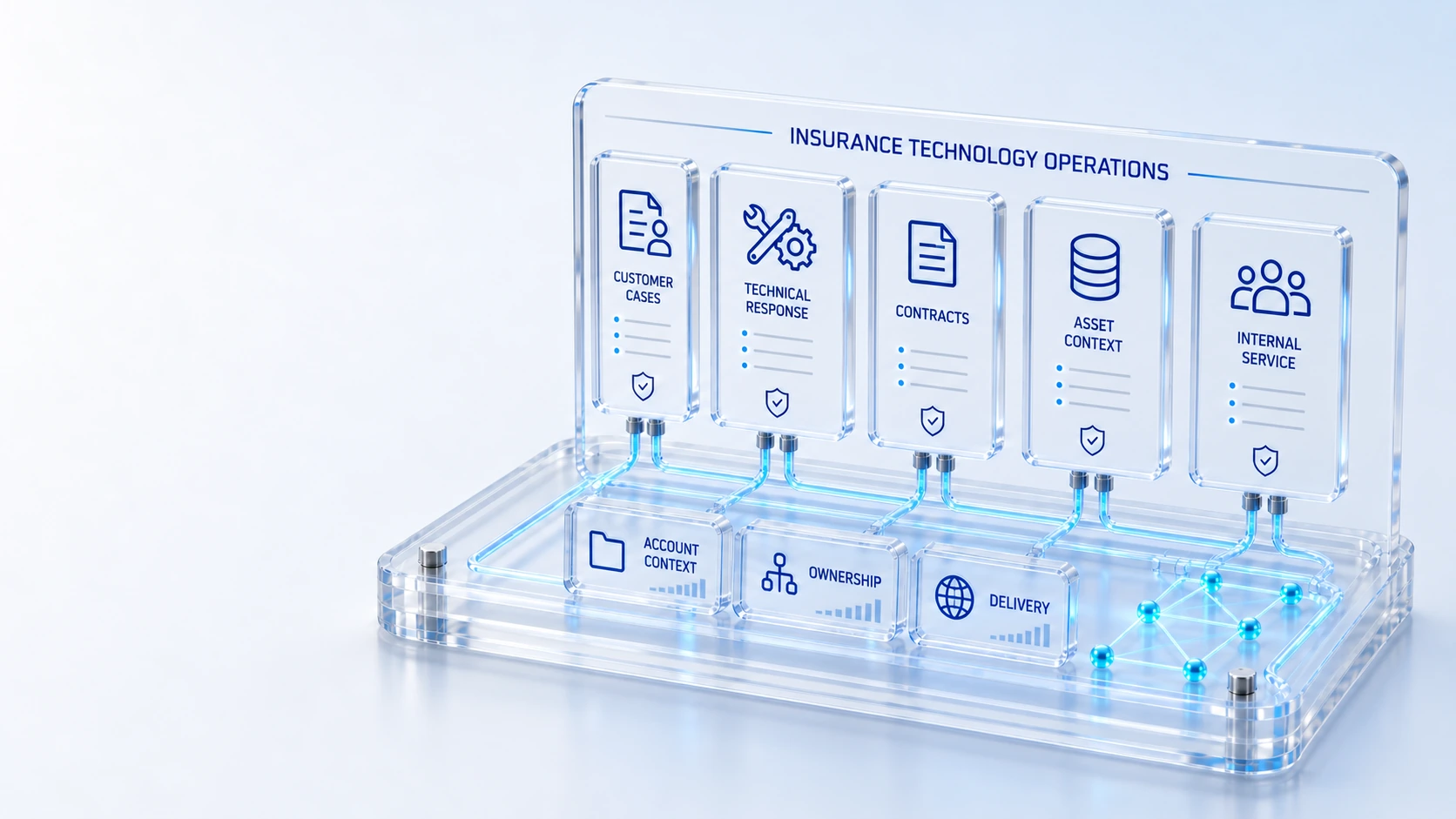
Customer Service ContextConnect accounts, cases and configured coverage.
Technical ResponseLink affected CIs and incidents.
Contracts and SuppliersReview agreements and responsibilities.
Technology OperationsThis use case covers service work, rather than claims processing.
ContextWork
Connect customer service context, technical response, contracts and internal service delivery. This is technology operations, not an insurance claims platform.
Connect accounts, cases and configured coverage.
Link affected CIs and incidents.
Review agreements and responsibilities.
This use case covers service work, rather than claims processing.
Context → Work → Evidence
Use cases describe technology and service operations. Requirements and implementation scope are reviewed during discovery.
Built into the platform
Validate customer, contact and affected-CI relationships.
Match configured contracts and service coverage.
Manage priority, assignment, investigation and restoration in connected records.
Track recurring issues, root cause and known-error work.
Coordinate onboarding, review and controlled offboarding.
Track assessments, review coverage and risk findings.
Actual product view
See the running demo environment. Features and records are subject to your role, configuration and integrations.
Connected capabilities
Connect account context, installed assets, entitlements, business service levels, playbooks, major cases and technical recovery.
Explore 02 / serviceUnite incidents, major incidents, problems, changes and requests with service context, accountable ownership and AI assistance.
Explore 03 / assetsConnect supplier onboarding, third-party risk, agreements, obligations, performance and controlled exit across enterprise operations.
ExploreImplementation context
Industry examples illustrate technology and service operations use cases, not industry certification or regulatory compliance. Scope, integrations, access and service commitments are agreed during discovery.
Who this is for
Insurance technology services can depend on internal support, customer-facing service teams and suppliers with different responsibilities. A useful operating model connects the service issue, recorded agreements and technical response while keeping insurance claims, underwriting and policy administration outside claims about the demonstrated enterprise service platform.
Illustrative walkthrough
In this illustrative scenario, an insurer evaluates a technology issue affecting a supported service. The service owner reviews customer or internal case context, relates the appropriate technical incident and inspects supplier obligations before coordinating work and reviewing the available evidence for service handback.
Identify the case or incident, affected service and accountable support owner. Review the relevant customer or internal service context without introducing claim or policyholder information into the public evaluation. Distinguish the technology problem from the insurer’s separate business decisions and regulated processing responsibilities.
Inspect the related technical response alongside recorded supplier, agreement and obligation context. Determine which team owns the next work and what evidence is needed. Do not assume that a contract entry establishes automatic entitlement to every service action or transfers the insurer’s accountability for interpreting its obligations.
Review technical status, service communication and any delivery evidence with the responsible owner. Record unresolved supplier or operational questions explicitly. Use the walkthrough to assess technology coordination and ownership, while evaluating data protection, insurance regulation and contractual service requirements separately for the intended implementation and permitted information scope.
Inspect the relationship between technology cases or incidents, supplier agreements and service evidence. This supports insurance technology operations assessment; it does not establish claims management, underwriting, policy administration, regulatory approval or the completeness of a supplier’s contractual performance.
Explore the platform
Open a workspace for a closer look.
Prepare the evaluation
These are evaluation criteria, not promised outcomes. Agree the baseline, scope, source coverage and acceptance method with the responsible owners before drawing conclusions.
Questions for this topic
This example concerns technology service operations, customer support context and supplier-related work. It does not establish claims processing, underwriting or policy administration functionality. Evaluate those specialized business systems separately and define any proposed integration, information boundary and operating responsibility explicitly during the discovery process.
No. Coverage and performance depend on the applicable agreement, its interpretation and the actual work involved. A supplier record provides context for the review. Include the responsible commercial and service owners so the evaluation distinguishes recorded obligations from confirmed entitlement and evidence of fulfillment.
Avoid sending sensitive policyholder, claim or production records through public website forms. Describe the technology workflow using anonymized or synthetic details. Agree any later data handling and access arrangements through the organization’s appropriate review before providing information beyond the permitted demonstration and inquiry scope.
Your next operating chapter
Bring one workflow, one service challenge or one part of your estate. We’ll show you where Qintorava fits.