Distributed Locations
Connect stores, sites and equipment.
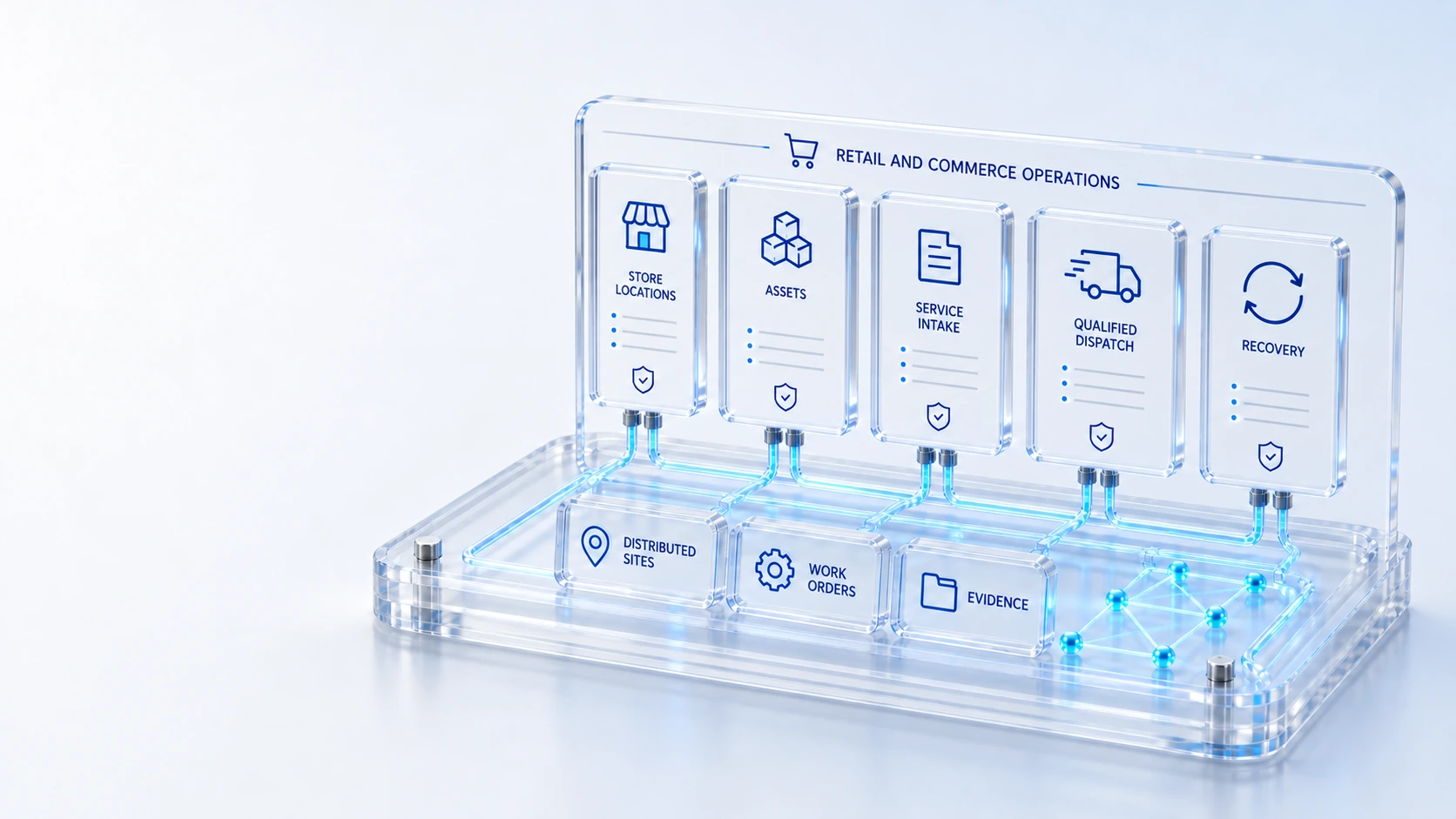
Distributed LocationsConnect stores, sites and equipment.
Asset LifecycleTrack custody, stockrooms and recovery.
Qualified DispatchCoordinate work across service locations.
Recovery EvidenceReturn completed work to accountable support.
ContextWork
Coordinate location-aware assets, service intake, qualified dispatch and recovery evidence across distributed operations.
Connect stores, sites and equipment.
Track custody, stockrooms and recovery.
Coordinate work across service locations.
Return completed work to accountable support.
Context → Work → Evidence
Use cases describe technology and service operations. Requirements and implementation scope are reviewed during discovery.
Built into the platform
Review inventory, capital exposure and lifecycle exceptions.
Manage hardware models and stored inventory.
Check skills, expiry, coverage, workload and resource absence.
Use published plans, dependencies and required checklists.
Validate customer, contact and affected-CI relationships.
Match configured contracts and service coverage.
Actual product view
See the running demo environment. Features and records are subject to your role, configuration and integrations.
Connected capabilities
Connect procurement, custody, inventory, stockrooms, warranty, leases, maintenance, disposal and employee recovery to the same hardware CIs.
Explore 02 / customerCoordinate qualified dispatch, work orders, appointments, recurring schedules and verified completion with cases and incidents.
Explore 03 / customerConnect account context, installed assets, entitlements, business service levels, playbooks, major cases and technical recovery.
ExploreImplementation context
Industry examples illustrate technology and service operations use cases, not industry certification or regulatory compliance. Scope, integrations, access and service commitments are agreed during discovery.
Who this is for
Distributed retail operations depend on equipment, locations and service teams that may work through separate records. When a store technology issue needs on-site attention, teams must connect asset responsibility and qualified coverage while preserving the distinction between technology service work and the organization’s commerce or payment systems.
Illustrative walkthrough
An illustrative retailer evaluates a support issue involving equipment at a store location. The team reviews the asset and service context, checks qualified field coverage and follows execution evidence back to the responsible support owner before deciding on the appropriate service handback.
Identify the affected location, recorded equipment and responsible support team. Review custody and relevant customer or service context where available. Keep uncertainty about the physical condition or impact visible instead of assuming that an asset record alone proves what is happening at the store or within its transaction systems.
Inspect coverage, qualifications, work-plan and appointment context for a required visit. Bring the relevant equipment information into the task without losing local access and operational responsibilities. A useful evaluation should show why the assignment is appropriate rather than treat geographic proximity or an available calendar slot as sufficient qualification.
Inspect execution evidence and verification with the service owner, retaining unresolved equipment or store issues as follow-up. Distinguish completed technical work from the business team’s acceptance of store readiness. Use the scenario to define scope and candidate measures without promising uninterrupted trading or a guaranteed commercial outcome.
Inspect store-related asset ownership, qualified field planning and completion evidence as a connected support journey. This supports distributed technology operations; it does not establish point-of-sale processing, commerce functionality, payment security certification or a guarantee that store trading will remain uninterrupted.
Explore the platform
Open a workspace for a closer look.
Prepare the evaluation
These are evaluation criteria, not promised outcomes. Agree the baseline, scope, source coverage and acceptance method with the responsible owners before drawing conclusions.
Questions for this topic
No. The example describes technology support, equipment context and qualified on-site work around distributed retail operations. It does not establish transaction processing, payments or commerce capabilities. Evaluate the platform alongside the organization’s specialized store systems and confirm any proposed integration and responsibility boundary during discovery.
The reviewed capabilities connect location-aware hardware context with qualified field execution and related service work. Use representative store records and roles to inspect the relationship. The record connection supports coordination but does not replace physical checks, local access procedures or acceptance by the responsible retail operations team.
No. A completed technology task provides execution evidence within the agreed scope. Trading readiness may depend on other systems, local checks and business decisions. Evaluate how support and store owners review the handback rather than using a task status as a universal assurance of uninterrupted retail operations.
Your next operating chapter
Bring one workflow, one service challenge or one part of your estate. We’ll show you where Qintorava fits.