Technology Inventory
Connect equipment, locations and lifecycle responsibility.
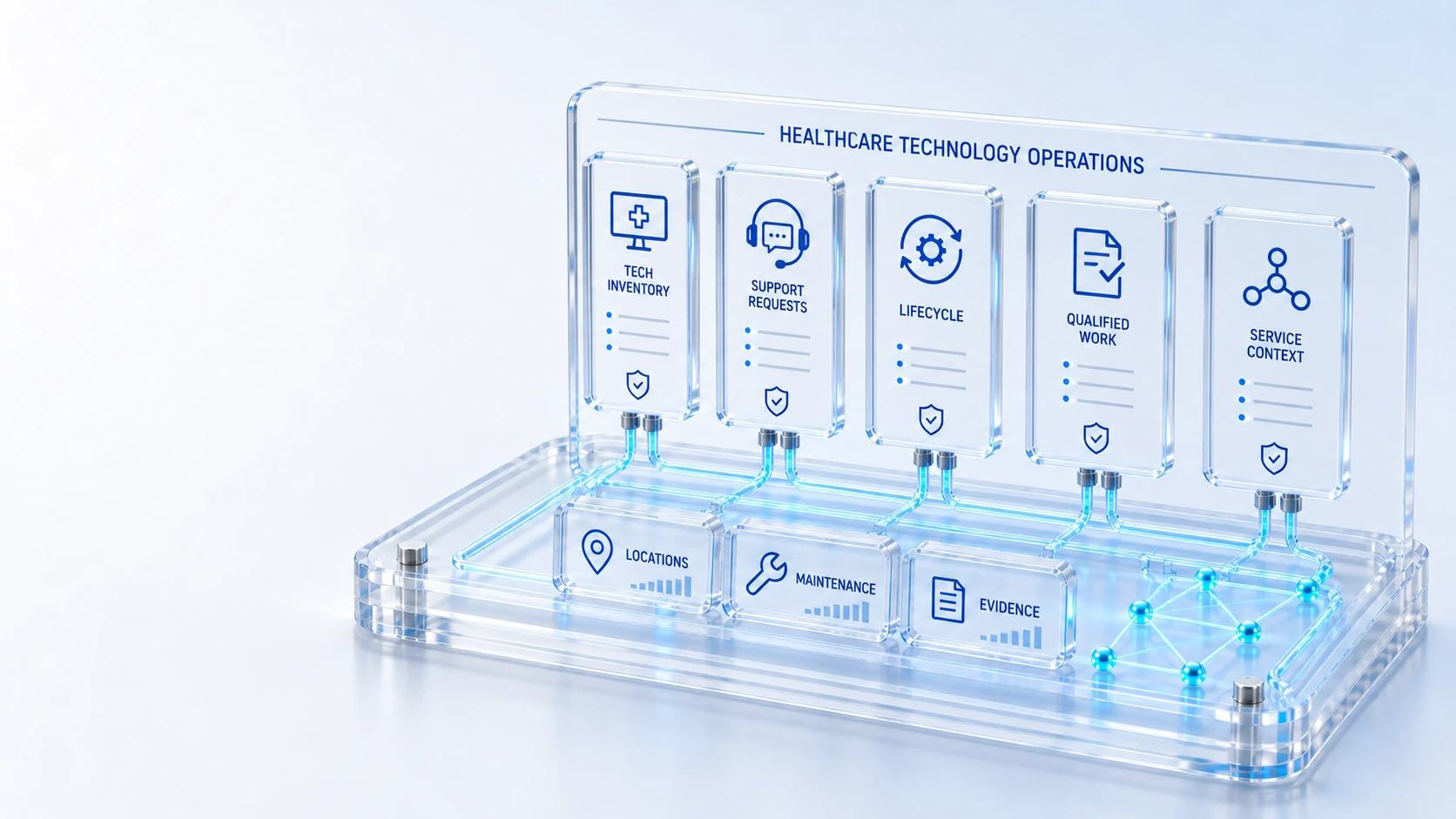
Technology InventoryConnect equipment, locations and lifecycle responsibility.
Support RequestsCoordinate technology intake and ownership.
Qualified Site WorkBring maintenance into the service context.
Implementation ReviewValidate clinical, privacy and regulatory requirements.
ContextWork
Coordinate technology inventory, support requests, lifecycle exposure and qualified field work. Validate clinical, privacy and regulatory requirements during discovery.
Connect equipment, locations and lifecycle responsibility.
Coordinate technology intake and ownership.
Bring maintenance into the service context.
Validate clinical, privacy and regulatory requirements.
Context → Work → Evidence
Use cases describe technology and service operations. Requirements and implementation scope are reviewed during discovery.
Built into the platform
Review inventory, capital exposure and lifecycle exceptions.
Manage hardware models and stored inventory.
Manage priority, assignment, investigation and restoration in connected records.
Track recurring issues, root cause and known-error work.
Check skills, expiry, coverage, workload and resource absence.
Use published plans, dependencies and required checklists.
Actual product view
See the running demo environment. Features and records are subject to your role, configuration and integrations.
Connected capabilities
Connect procurement, custody, inventory, stockrooms, warranty, leases, maintenance, disposal and employee recovery to the same hardware CIs.
Explore 02 / serviceUnite incidents, major incidents, problems, changes and requests with service context, accountable ownership and AI assistance.
Explore 03 / customerCoordinate qualified dispatch, work orders, appointments, recurring schedules and verified completion with cases and incidents.
ExploreImplementation context
Industry examples illustrate technology and service operations use cases, not industry certification or regulatory compliance. Scope, integrations, access and service commitments are agreed during discovery.
Who this is for
Healthcare technology teams must coordinate service requests, equipment responsibility and on-site work without losing ownership or confusing operational records with clinical decisions. A useful evaluation connects the technology support journey while explicitly assessing privacy, clinical safety and deployment requirements for the particular healthcare organization.
Illustrative walkthrough
In this illustrative scenario, a healthcare technology team receives a support request involving a workstation used in a care setting. Staff inspect the equipment and custody context, coordinate the relevant service response and evaluate a qualified visit where necessary without placing patient records into the public evaluation.
Identify the service request, affected equipment, recorded location and responsible support team. Keep the example focused on technology operations rather than patient information or clinical advice. Review the available hardware and configuration context before deciding which technical or on-site teams should participate in the work.
Inspect custody, lifecycle exposure and the appropriate field coverage or work plan where a visit is required. Preserve the healthcare organization’s local access, safety and clinical procedures. A useful operating workflow should make responsibilities clearer without implying that the platform authorizes clinical decisions or operation of specialized medical equipment.
Inspect completed service and field evidence with the responsible technology owner. Record unresolved equipment or access issues rather than equate a task status with clinical readiness. Validate privacy, deployment and regulatory requirements separately with the organization before deciding how the evaluated workflow should be used in a production care environment.
Inspect technology request ownership, hardware responsibility and qualified work evidence for the chosen scenario. This supports evaluation of healthcare IT operations; it does not establish clinical functionality, medical-device safety, patient-care suitability or an unverified privacy or industry compliance certification.
Explore the platform
Open a workspace for a closer look.
Prepare the evaluation
These are evaluation criteria, not promised outcomes. Agree the baseline, scope, source coverage and acceptance method with the responsible owners before drawing conclusions.
Questions for this topic
The demonstrated scenario addresses technology service work, equipment lifecycle and qualified field execution. It does not establish electronic health record functionality, clinical decision support or medical advice. Assess specialized clinical systems and patient-data responsibilities separately when defining a healthcare technology implementation and its permitted data scope.
No. The website does not assert an unverified healthcare certification or guarantee regulatory compliance. Your organization must assess applicable privacy, clinical safety, contractual and deployment requirements for the specific scope. Use discovery to identify those questions and request relevant evidence before making a production decision.
No. Describe the technology workflow using anonymized or synthetic context and avoid including patient records or sensitive clinical details in public forms. Agree any later data handling, access and evaluation arrangements through the appropriate organizational review before providing information beyond the permitted demonstration scope.
Your next operating chapter
Bring one workflow, one service challenge or one part of your estate. We’ll show you where Qintorava fits.